
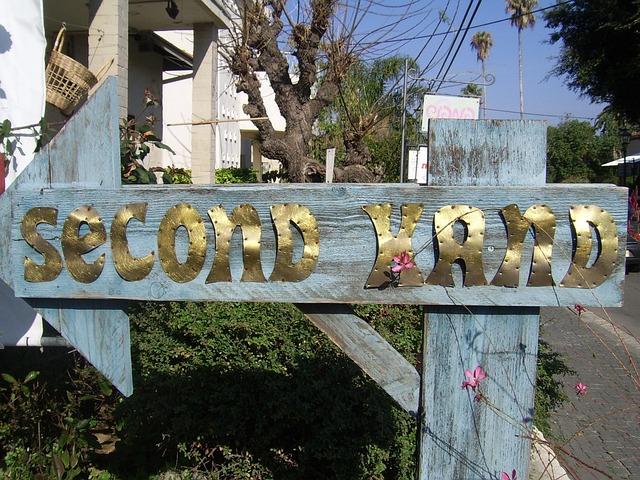
If your idea of treasure hunting involves patterned kaftans, sun-bleached denim, and brass trinkets that look like they’ve lived a thousand lives, Marrakech is your playground. Beyond the postcard-perfect souks, the city hides a lively secondhand scene-friperies tucked down side streets, flea-market corners bursting with character, and warehouses where vintage and everyday finds mingle in glorious, dusty harmony. It’s thrifting with a Moroccan twist: part browsing, part storytelling, and a little bit of friendly bargaining over a cup of mint tea.
This guide is your warm handshake into that world. We’ll point you toward reliable neighborhoods, explain how Marrakech thrift differs from Western-style stores, and share tips on when to go, what to bring, and how to haggle without the stress. Expect a mix of practical advice and local flavor-think retro leather jackets next to handwoven rugs, 70s sunglasses beside beaten-up travel trunks, and the occasional designer surprise hiding in a pile.
Whether you’re curating a capsule wardrobe, shopping more sustainably, or simply chasing something you won’t see on anyone else back home, consider this your invitation to slow down, follow your curiosity, and let Marrakech’s secondhand magic find you.
Table of Contents
- Your early morning game plan at Bab El Khemis flea market what to hunt on Thursdays where to start and friendly price ranges for rugs brass and lanterns
- Guéliz vintage finds on Rue de la Liberté and Rue de Yougoslavie curated fashion vinyl and the best coffee stops to refuel between shops
- Souk Zrabi and Souk Cherratine secrets how to spot handwoven quality real leather and when to bargain or walk away
- Cash cards and shipping made easy essential haggling phrases nearby ATMs and reliable pack and post spots around Jemaa el Fna and Poste Maroc
- Closing Remarks
Your early morning game plan at Bab El Khemis flea market what to hunt on Thursdays where to start and friendly price ranges for rugs brass and lanterns
Beat the sun: roll in just after first light, when vans unload fresh house-clear-outs and stalls are still being built. Grab a mint tea by the gate and make a clockwise sweep: textiles first while they’re still neatly stacked, then drift into the clink of metal for brass, and finish in the shaded lanes for lanterns as the light hits their patterns. Use your senses-look for older wood hangers, hand-tied tassels, soft wool underhand, and that warm brass patina. On Thursdays the selection swells, so work fast, tag favorites, and circle back before the tour groups filter in.
- Where to start: Enter through the main gate and veer left for rug piles; swing right after for ironmonger lanes where brass trays and teapots cluster; end inside the covered strip for pierced-metal lanterns.
- What to hunt on Thursdays: flatweave kilims, Azilal fragments, door knockers, tea trays, pierced “fanoos” lanterns, and oddball architectural salvage.
- Quick checks: flip rugs for hand-knotted backs, tap brass for a mellow ring (not a tinny clack), and test lantern doors/hinges.
- Pro tip: mark your spot with a phone snap and the vendor’s name; the maze gets lively and pieces move fast.
Keep pricing friendly and flexible. Open with a smile and a soft offer, then aim to land around 40-60% below the first quote for common finds; expect to pay more for standout condition or age. Cash is king, smaller bills help, and bundling two or three items often unlocks the best deal. These ballpark ranges are a helpful compass-use them with your own eye and comfort.
- Rugs: small vintage kilims 400-1,200 MAD; mid-size wool pieces 1,200-3,500 MAD; larger or characterful textiles 3,500-8,000+ MAD.
- Brass: tea trays 200-800 MAD (size and weight matter); teapots 120-300 MAD; door knockers 150-400 MAD; heavier antique-grade pieces priced higher.
- Lanterns: simple pierced tin 120-250 MAD; mid-size brass or mixed-metal 300-800 MAD; large statement lanterns 900-1,800+ MAD.
- Negotiation cues: ask “prix local?”, check for repairs, and keep it light-polite bargaining gets you further than hard elbows.
Guéliz vintage finds on Rue de la Liberté and Rue de Yougoslavie curated fashion vinyl and the best coffee stops to refuel between shops
In the modern heart of Marrakech, wander the sunlit stretch between Rue de la Liberté and Rue de Yougoslavie and you’ll slip into a world of hand-picked garments, quiet ateliers, and crackling vinyl bins. Shopkeepers here favor quality over quantity: think soft-worn leather crossbodies, French workwear jackets, 70s silk blouses, and one-off kaftans revived with new trims. Between boutiques, you’ll often spot pop-up record crates with Moroccan gnawa, desert blues, French chanson, and golden-age rai-perfect soundtrack fodder for your riad evenings. Bring a roomy tote, take your time, and let the rails do the talking.
- What to hunt for: natural fibers (linen, wool, silk), sturdy stitching, and old metal zips; look for patina, not damage.
- Smart checks: hold items to the light for moth bites, test seams, and scan collars/cuffs for wear.
- Fit fix: many tailors nearby can tighten waists or shorten hems the same day-ask the shop for a recommendation.
- Vinyl tip: inspect sleeves and play surfaces; a soft wipe in-store can reveal hidden scratches.
- Etiquette: greet with a smile, ask questions, and haggle gently-polite curiosity goes a long way.
When the afternoon glow hits Guéliz, refuel like a local before looping back for round two. You’re never far from a smooth espresso, mint spritzers, or a shady terrace where you can tally your finds and plan the next stop. These friendly cafés are within easy strolls of both streets and make perfect pit stops between treasure hunts.
- Kechmara (off Rue de la Liberté): Industrial-chic staple with a breezy rooftop; great cold brew and seasonal lemonade.
- Grand Café de la Poste (near Place 16 Novembre): Old-school glamour, powerful espresso, and a classic club sandwich if you need a longer pause.
- Le 16 Café (Place 16 Novembre): Reliable, central, and quick-ideal for a pastry-and-shot pit stop before you dive back in.
- Pâtisserie Amandine (a short detour in Guéliz): Delicate Moroccan-French desserts; pair a mint tea or cappuccino with their almond treats.
Souk Zrabi and Souk Cherratine secrets how to spot handwoven quality real leather and when to bargain or walk away
In the carpet quarter, trust your fingertips and the flip test. Real handwork feels alive: it drapes, breathes, and shows little quirks that machines iron out. Before you fall for a bold pattern, quietly flip a corner and look for the artisan’s fingerprint-subtle irregularities that mean someone sat at a loom for weeks. Don’t be shy to ask about the tribe, the loom, and the dyes; a confident seller loves sharing those details and will let the texture speak for itself.
- Backside truth: Hand-knotted rugs show uneven knots and tiny color specks on the back; machine-made backs look uniform, almost printed.
- Fringe check: Authentic pieces have fringe that is the warp threads, not sewn on after the fact.
- Edges and selvedge: Clean, hand-bound edges with no glue or plastic mesh; a bit of waviness is normal and good.
- Dye telltales: Natural dyes have soft shifts and sun-kissed variations; with permission, a gentle rub using a slightly damp white tissue should show little to no bleed.
- Feel and fall: Wool should feel springy, slightly oily (lanolin), and the rug should drape when lifted-not sit board-stiff.
- Pattern personality: Tiny asymmetries and non-perfect geometry signal a human hand; laser-perfect repeats often mean machine.
- Provenance talk: Ask about weaving time, knot count, and region. Clear, consistent answers are a green flag.
In the leatherworkers’ lane, the right hide wins you for life. Real leather has soul-an earthy scent, pores you can see, and a grain that moves when you press it. Take a moment in natural light, breathe in, flex the strap, and check the stitching before you even discuss numbers. Then bargain like a local: warmly, playfully, with a firm budget and no rush-because the best deal is the one you can celebrate on the walk back to your riad.
- Smell and grain: Genuine leather smells warm, not chemical. Look for natural pores and slight wrinkles that appear when you press.
- Edge and underside: The cross-section should look fibrous, and the back should be suede-like, not fabric or paper.
- Water and bend: A tiny drop (ask first) should darken briefly then dry; bending should not crack, only crease lightly.
- Build quality: Even stitching, solid hardware, clean lining. Vegetable-tanned hides feel firm with a matte glow and rich patina potential.
- Start soft, stay steady: Open with a smile and a price at 30-40% of the first ask; expect to land around 60-70% for good quality.
- Bundle and budget: Combine items for value, set a walk-away number, and stick to it-silence and patience help.
- When to walk: If you’re rushed, defects are dismissed, prices won’t move after a few friendly counters, or the final piece isn’t the exact one you inspected, thank them and stroll on.
Cash cards and shipping made easy essential haggling phrases nearby ATMs and reliable pack and post spots around Jemaa el Fna and Poste Maroc
Most souk stalls still love cash, while cards are more welcome in fixed-price boutiques and cafés in Gueliz. For quick withdrawals, you’ll find branch-attached ATMs radiating from the square-safer and better lit. Bring small notes for bargaining wins and keep coins for porters and tea. A few practical pointers below help you dodge surprise fees and keep things smooth when you’re hopping between thrift havens and snack breaks.
- Nearby ATMs: Attijariwafa on Rue Bab Agnaou, Bank of Africa/BMCE by Hotel Ali, Banque Populaire toward the Koutoubia, plus CIH and Société Générale along Avenue Mohammed V (a short stroll or quick petit taxi).
- Fees & currency: Expect local ATM fees around 20-40 MAD; decline “dynamic currency conversion” and charge in dirhams (MAD) for a better rate.
- Safety first: Use machines attached to open branches, cover the keypad, and withdraw in daylight; split your cash between pockets.
- Change strategy: ATMs spit out 100/200 notes-break them at cafés; keep 10-20 MAD coins for tips and small barters.
- Cards: Contactless works at larger shops; many stalls add a small fee for cards or don’t accept them at all-ask first.
Ship your treasures without stress and bargain like a local. For parcels, head to Poste Maroc near the square (ask for the Amana counter for tracked boxes), or use express options in Gueliz (DHL/FedEx/Aramex) when speed matters. Domestic boxes and packing supplies are easy at CTM Messagerie near Bab Doukkala. Smile, keep it playful, and let the phrases below do the talking-polite persistence wins more than hard lines.
- Bsh-hal? – How much?
- Ghali bzzaaf! – That’s too expensive!
- Nqes shwiya, 3afak. – Lower it a little, please.
- Ila khdit jouj, bch-hal? – If I take two, how much?
- Ila shrit bzzaaf, t3tini thaman mzyan? – If I buy more, can you give a good price?
- 3ndi ghir … – I only have …
- Shnu akher thaman? – What’s your final price?
- Ghadi nfakar shwiya. – I’ll think about it.
- Mashi mouchkil, choukran. – No worries, thank you.
- Nkhallsek cash. – I’ll pay cash.
- Pack & post spots: Poste Maroc (ask for “Amana” tracked parcels); express counters in Gueliz for DHL/FedEx/Aramex; CTM Messagerie for sturdy boxes and domestic shipping.
- At the counter (French helps): “Un colis pour l’étranger, s’il vous plaît” (a parcel for abroad), “Avec suivi?” (with tracking), “Fragile“.
- Prep tips: Photograph items, keep receipts, pad ceramics well, and check prohibited items; typical delivery estimates: EU 7-14 days, US 10-21 days.
- Paperwork: Bring your passport; keep the tracking receipt safe and snap a photo of it.
Closing Remarks
Whether you wander through pink-hued alleys or dip into tucked-away corners of Guéliz, thrifting in Marrakech is as much about the moments as the finds: the clink of brass, a swirl of color, the kindness of a shopkeeper pouring mint tea while you mull over a vintage jacket. Let yourself linger. Trust your eye. And remember, a friendly haggle here is part of the story your new treasure will tell.
I hope this guide helps you step into the city with curiosity and confidence-supporting local sellers, giving beautiful pieces a second life, and coming home with souvenirs you’ll actually use and love. If you stumble upon a hidden gem (or a shop cat who steals the show), share your find and your tips-I’d love to hear which stalls captured your heart.
Until then, happy thrifting. May your bags be light on the way in, and delightfully heavy on the way out.
