
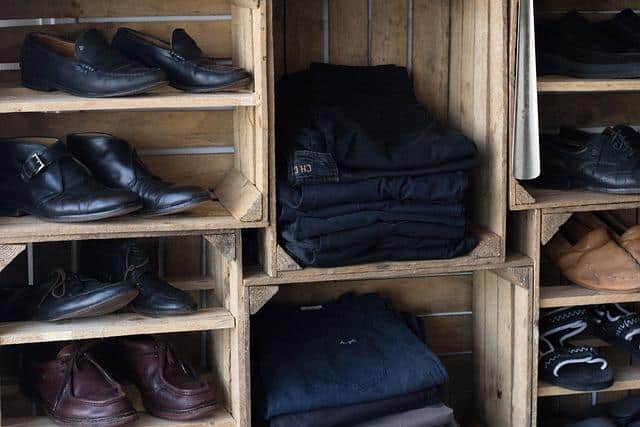
If the jingle of hangers and the faint scent of old paper make your heart beat a little faster, you’re in the right place. Thrift stores are part treasure hunt, part time machine-and with a few insider tricks, they’re the best place to score pieces that look like you spent a fortune but didn’t.
In , we’re unpacking the know-how seasoned thrifters swear by. You’ll learn how to spot quality at a glance, decode labels and hardware, shop at the right times, and care for your finds so they last another lifetime. We’ll also talk budget, bargaining, and the magic of building a personal style that’s sustainable and uniquely yours.
Whether you’re hunting for a buttery leather jacket, a mid-century side table, or the perfect pair of worn-in jeans, consider this your friendly roadmap to turning crowded racks into can’t-believe-it treasure. Grab a tote bag-let’s go find some stories you can wear.
Table of Contents
- Work the floor smartly start at new arrivals racks and end caps then feel for wool silk linen and heavyweight cotton
- Verify true vintage check union tags like ILGWU and ACTWU look for metal Talon zippers and expect minimal or older care labels
- Time your trips shop early on restock days ask staff when new racks roll out and build a neighborhood route to hit several stores in one go
- Care that keeps value hand wash silk steam wool use a blind stitch for quick mends and store pieces in breathable cotton bags with cedar
- The Way Forward
Work the floor smartly start at new arrivals racks and end caps then feel for wool silk linen and heavyweight cotton
Hit the sales floor with a plan: make a beeline to the pieces that just landed, where the best vintage often hides before it’s dispersed. Scan hangers for texture and silhouette, not sizes-great fabric will stop your hand before your eyes catch the label. End-of-aisle displays are mini-curations where staff park standout finds or odd sizes; swing through them first and last. Grab now, sort later-carry a quick “edit pile” so nothing gold gets snatched while you debate.
- New arrivals: The freshest donations and early-bird gems usually live on rolling racks or near the registers.
- Rolling carts: If store policy allows, politely browse-this is where unpicked treasures debut.
- End caps: Curated spillover and seasonal highlights; quick-win territory.
- Fitting room returns: Pre-vetted by other shoppers-often quality and on-trend.
- Timing tip: Drop by right after opening or just after restock hours for first dibs.
Once you’ve mapped the hotspots, let your fingertips do the curating. Premium natural fibers reveal quality instantly-cool, dry, springy, dense-and they drape with intention. Confirm by checking inside: seam work, linings, and hardware rarely lie. Trust texture first, labels second, and watch how the fabric falls from your hand; the right material feels substantial without stiffness.
- Wool: Springy and warm to the touch; look for tight weaves, crisp creases, and watch for moth nibbles.
- Silk: Cool, fluid, and quietly lustrous; avoid the plasticky squeak of polyester imitators.
- Linen: Dry, nubby slubs and honest wrinkles; high-end pieces use French seams or bound edges.
- Heavyweight cotton: Dense twills and beefy jersey; seek chainstitch hems, selvedge edges, and sturdy pocketing.
- Quality tells: Union labels, corozo/horn buttons, Talon/Scovill zippers, pattern-matched pockets, and fully lined skirts or jackets.
Verify true vintage check union tags like ILGWU and ACTWU look for metal Talon zippers and expect minimal or older care labels
Before you fall in love with a print, peek at the inner seams. Heritage labor labels are tiny time-stamps that separate yesterday’s craft from today’s remakes. Seek out ILGWU and ACTWU labels-both signal American garment industry roots and often pre-fast fashion construction. ILGWU labels commonly feature a circular rosette and patriotic colors; tags reading AFL-CIO typically place the piece in the mid-1950s through early 1990s. ACTWU appears from the late 1970s into the mid-1990s. You may also see later mergers like UNITE (mid-1990s) and UNITE HERE (2000s), which help narrow a date range. Woven labels with slightly uneven ink, older typography, and “Made in U.S.A.” are all encouraging signs.
- ILGWU: Look for a circular crest/rosette, “Union Made,” and AFL-CIO on mid-century to late-century tags.
- ACTWU: Appears after 1976; blocky type and straightforward “Union Made” phrasing are common.
- Clues by era: “UNITE” usually indicates mid-90s+, “UNITE HERE” the 2000s+; helpful for bracketing age.
- Condition counts: Slight fading, soft fray at the label edge, and older stitching techniques point to authentic age.
Hardware and instructions tell a story, too. Vintage everyday wear often used sturdy, metal hardware-so a metal Talon zipper (or Scovill, Crown, Lightning) with a stamped pull is a strong period cue, especially pre-1970s. Plastic coil or invisible zippers tend to skew newer. As for care info, true older pieces frequently have minimal instructions or none at all; detailed multi-language care blocks, fiber percentages, and modern symbols arrived later. Keep an eye out for RN/WPL numbers (you can research them) and sparse labels that simply say “Dry Clean.”
- Zippers: Metal teeth and a branded pull (e.g., Talon) suggest earlier manufacture; plastic coil zips are more recent.
- Care tags: One-line directives or older fonts feel right; extensive icons, multiple languages, and barcodes signal modern.
- Numbers to note: RN/WPL can help identify the maker and approximate era; use them as supporting evidence, not the only proof.
- Trust the mix: Align union labels, hardware, fabric hand, and construction details to confirm authentic age.
Time your trips shop early on restock days ask staff when new racks roll out and build a neighborhood route to hit several stores in one go
Catch the freshest finds by arriving in the first hour-that’s when newly processed items often hit the floor. Keep an eye out for rolling racks or carts leaving the back room, and shadow them (politely) as they’re stocked. Be warm with staff and ask specific, easy-to-answer questions about when they typically push new merchandise. You’re not prying; you’re planning. Note color-tag rotations, busy days to avoid, and which sections get replenished first so you can scan smart, not slow.
- Smart questions to ask: “What days do you usually roll out new racks?” “Is there a typical time for restocking?” “Which sections get refreshed first?” “Do color tags change on a set schedule?”
- Fresh-stock telltales: Z-racks near aisles, garments with crisp plastic fasteners, clusters of the same brand/size, and staff wheeling out bins or folded stacks.
- Build a tight loop: Map 4-6 stores within a few miles, ordered by their likely restock windows. Hit your “anchor” store first, then orbit outward.
- Time-box each stop: 10-15 minutes for a surgical scan (outerwear, denim, dresses, knitwear, shoes), then move on before the selection gets picked over.
- Work the calendar: Pair your route with discount days and midweek lulls; rainy weekdays can be gold with lighter foot traffic.
- Keep a thrift log: Track which stores restock when, your best categories per location, and average hit rates-then refine your loop accordingly.
Bring a small tote, a measuring tape, and hand sanitizer to keep your flow quick, and batch your errands nearby (coffee pickup, post office, curbside returns) so every loop stays efficient. With a repeatable route and friendly intel, you’ll turn chance hunts into consistent scores-and snag the good stuff before it ever hits the fitting room queue.
Care that keeps value hand wash silk steam wool use a blind stitch for quick mends and store pieces in breathable cotton bags with cedar
Care is currency when it comes to vintage. Treat luxe fabrics like treasure: gently hand‑wash silk in cool water with a pH‑neutral soap, roll in a towel to remove excess moisture, and press with a cloth-never wring. For knits and tailored pieces, skip the scorch and steam wool to revive shape. Keep your fixes invisible with a quick blind stitch: tiny, alternating bites along the fold that close seams without a trace. A small mending kit-matching thread, fine needles, beeswax, and a sweater comb-pays for itself in saved hemlines and rescued cuffs.
- Silk: Cool water, minimal agitation, no soaking over 5 minutes. Blot, don’t rub. Press inside‑out with a cloth on low heat.
- Wool: Steam from a short distance, reshape on a flat surface, and de‑pill with a light hand. Avoid the dryer, always.
- Blind stitch basics: Match thread, hide the knot in the fold, take micro stitches from each side, then gently snug-never yank.
- Spot care: Test hidden areas first. Lift oil stains with cornstarch; lift odors with a light vodka spritz and air out.
Once clean and mended, think preservation. Store pieces in breathable cotton bags to prevent moisture build‑up, and tuck in cedar blocks or sachets to deter moths-refresh them with a quick sanding each season. Always store garments fully dry, padded with acid‑free tissue to support shoulders and pleats, and keep them far from direct sun. Shoes and bags deserve structure too: use shoe trees and stuff handbags lightly so they hold their silhouette for years to come.
- Before storage: Clean or air items; residual body oils attract pests.
- Protection: Cotton garment bags beat plastic; add silica gel in humid climates.
- Organization: Label bags by era or fabric so treasures are easy to find and rotate.
- Moth insurance: Freeze suspect wool for 48 hours, then air out to break the life cycle.
The Way Forward
If thrift shopping is a treasure hunt, consider yourself officially armed with a map. With a little patience, a curious eye, and these insider secrets, you’re ready to spot quality, score one-of-a-kind pieces, and keep fashion fun, affordable, and a little more planet-friendly.
Now it’s your turn: pop into that shop you always walk past, follow your instincts, and enjoy the hunt. Found a gem? Share it in the comments or tag me so we can all cheer you on-and learn from your finds.
Want more vintage know-how? Stick around for upcoming guides on caring for delicate fabrics, dating labels, and thrifting denim that fits like a dream.
Until then, happy thrifting-and may the best racks be in your favor.
