
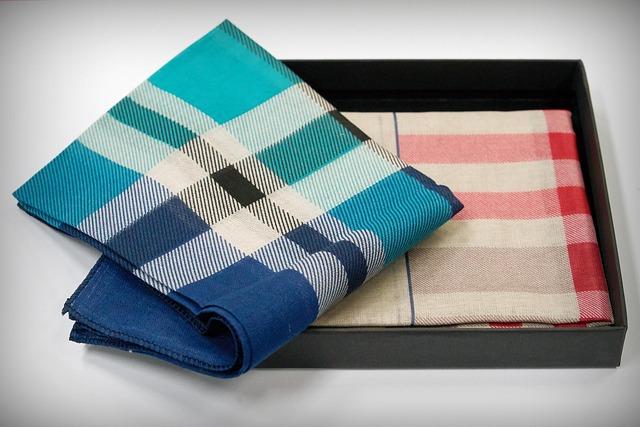
Consider this your permission slip to raid Grandma’s linen drawer. Those delicate, floral handkerchiefs tucked away in thrift shops and attic boxes are more than nostalgia-they’re the perfect canvas for breezy, made-to-measure crop tops. Lightweight, pretty, and often edged with beautiful rolled hems or lace, vintage hankies transform into summer-ready pieces with surprisingly little effort.
In this guide, we’ll turn a charming square into a chic top you’ll actually wear-think festival-friendly, brunch-approved, and ideal for layering. I’ll walk you through choosing the right handkerchiefs, prepping delicate fabrics, and creating simple silhouettes with ties, halter straps, or elastic. No sewing machine? No problem. We’ll cover quick no-sew options, clever lining tricks for sheerer fabrics, and easy fit tweaks whether you’re working with one hanky or piecing a few together.
Sustainable, budget-friendly, and uniquely yours-this is upcycling at its prettiest. Grab your favorite prints, a few basic supplies, and let’s make something beautiful.
Table of Contents
- Choosing Sturdy Cotton Handkerchiefs in the 18 to 22 inch Range for Best Coverage
- Wash Test Colorfast Prep and the Essential Tools for Working with Vintage Fabric
- Cut Plans and Measurements for Triangle Bandeau and Halter Tops with Tie Lengths
- Sewing Steps Finishing Options and Fit Adjustments for Secure Straps and Clean Hems
- Future Outlook
Choosing Sturdy Cotton Handkerchiefs in the 18 to 22 inch Range for Best Coverage
Size is your secret weapon for turning heirloom squares into wearable art. Aim for 18-22 inches per side so you can fold on the bias, achieve fuller bust coverage, and still have enough length to tie securely without digging into your back. Vintage cotton with a tighter weave drapes beautifully while staying opaque; look for a medium hand (roughly 90-130 gsm), which resists warping when knotted and stands up to stitching. A 20-inch square yields a diagonal of about 28 inches-plenty to wrap and knot comfortably-while 22 inches is ideal for fuller cups or longer torsos. If you’re on the cusp, layer or overlap two smaller squares for more structure and pattern play.
- Fiber & weave: 100% cotton lawn/cambric/poplin; avoid gauzy voile that can turn sheer under tension.
- Edge integrity: Tight rolled hems or mitered corners with dense stitching; loose, frayed edges can unravel when tied.
- Opacity test: Hold to a window; if you can clearly see your fingers, plan to line or double up.
- Colorfast check: Rub a damp white cloth on a corner-no transfer means safer summer sweat days.
- Square up: Measure both sides and diagonals; a true square folds cleanly and centers motifs symmetrically.
- Condition: No dry rot or brittleness; give a gentle tug near the hem to ensure fibers aren’t snapping.
- Prewash: Warm wash and press before cutting to preshrink and smooth the grain for crisp seams.
Construction details make the difference between “cute for a photo” and “wear-all-day”. Reinforce the two tie corners with tiny cotton patches or a sliver of lightweight interfacing, then topstitch 1/8 inch from the edge to lock the hem. Add soft cotton twill tape or bias ties at corners with bar tacks for strength; for extra width, seam two squares with a narrow French seam and align prints for a seamless look. Keep the bias fold smooth (no tugging) to preserve drape, and press after each stitch line for a polished finish.
- Fuller bust: Choose 22-inch squares or overlap two 18-inch pieces; try cross-back ties for lift without neck strain.
- Long torso: Drop the knot slightly lower on the back; short torso? Tie higher for a leg-lengthening line.
- Sensitive skin: Stick to washed cotton and soft tapes; avoid scratchy synthetics for straps.
- Print placement: Center monograms or florals on the bias for a designer finish.
- Extra coverage: Double-layer with a plain cotton underlay to tame sheerness and add structure.
Wash Test Colorfast Prep and the Essential Tools for Working with Vintage Fabric
Before you cut straps or pin a dart, make sure those heirloom squares won’t bleed, shrink, or warp. Vintage cottons and linens can carry fugitive dyes, so a gentle preflight keeps prints crisp and edges intact-essential when a single rogue drop of color can ghost across your soon-to-be-chic crop top. Aim for cool water, a pH‑neutral detergent, and patience; let the water do the work, not friction. Press while barely damp with a press cloth and low heat to re-square each handkerchief, and stabilize light, floaty weaves with a whisper of spray starch before cutting so your seams stay sharp and your bias bindings behave.
- Spot test: Dampen a white cotton swab with cool water + a drop of gentle soap; rub a hidden corner. If color lifts onto the swab or a white paper towel, proceed with extra caution.
- Basin test: Soak individually in cool water with a tiny bit of neutral detergent; add a dye-catcher sheet and watch the water. Repeat short soaks until water runs clear-avoid long, hot baths.
- Protect fibers: Hand wash only; never wring. Roll in a towel to remove moisture, dry flat, and press from the wrong side with a press cloth. Use a mesh bag if you must rinse under a tap.
- Stabilize edges: Lightly starch, then staystitch 1/8 in. from raw edges or hand-baste to tame fray before layout. Mark motifs you want to feature front and center on the crop top.
- Fixatives, if needed: For persistent bleed on cellulose fibers, consider a dye fixative (e.g., for cotton) strictly per label-and always test on a scrap first.
Delicate, decades-old fibers act like divas; the right kit keeps them cooperative. Opt for tools that are fine, sharp, and gentle so stitches glide, hems roll neatly, and those airy corners don’t snag. A well-pressed, well-supported handkerchief sews like a dream and lets you focus on pretty things-like bias-bound straps and French seams that look couture inside and out.
- Needles: Microtex/Sharp 60/8-70/10 for clean piercings; swap at the first snag or pop.
- Thread: Smooth 50 wt cotton or fine poly; silk thread for hand-basting to avoid impressions.
- Pins & clips: Extra-fine glass-head pins or silk pins; use quilting clips at edges to prevent holes.
- Cutting: Fresh rotary blade + self-healing mat for accuracy; micro-serrated shears for control; pattern weights to skip pin distortion.
- Stabilizers: Lightweight sew-in or ultra-sheer fusible knit (sparingly), stay tape for necklines, Fray Check for corners, and wash-away basting tape for tricky hems.
- Feet & aids: Walking foot to prevent puckers, narrow/rolled-hem foot for tidy edges, bias tape maker for straps.
- Pressing: Low-heat iron, wool mat, cotton press cloth, tailor’s ham, and a clapper for crisp, low-heat creases.
- Marking & measuring: Chalk pencil or Hera marker (no bleed risk), fine ruler, and a seam gauge for precise hems.
- Laundry helpers: Dye-catcher sheets for the first washes and a mesh laundry bag to baby the finished top.
Cut Plans and Measurements for Triangle Bandeau and Halter Tops with Tie Lengths
Triangle-style bandeau works best with vintage squares measuring 18-22 in. Prewash and press, then decide if you’ll keep the original rolled hem as a design detail. Fold the square on the bias (corner to corner) to form a triangle; the folded edge becomes the base. Aim for a finished triangle height of 8-13 in depending on coverage, and add a narrow 1/4 in seam allowance if you plan to stitch rather than just fold and topstitch. Cut ties on the bias at 1.75-2 in wide; fold, press, and stitch to finish at about 1/2 in width for soft, comfy bows.
- Coverage guide (finished triangle): A-B: base 16-18 in, height 8-9 in; C-D: base 18-20 in, height 10-11 in; DD+: base 20-22 in, height 12-13 in.
- Side/back ties (each): petite 22-24 in, regular 26-28 in, curvy/plus 30-34 in.
- Optional underbust band: cut height 2.5-3 in (finishes to ~1 in) by length = high underbust measurement + 10-14 in total for ties.
- Seam options: keep the hand-rolled hem visible; or add a 1/4 in baby hem or narrow zigzag for fray-prone vintage lawns.
For a breezy halter front, use the square as a diamond with the top corner at the neckline. Stabilize the top corner with a tiny facing or a scrap of lightweight fusible, then attach neck ties. The two side corners wrap to the back; add a slim band for security if your fabric is slippery. When piecing from smaller hankies, join two matching triangles along the center with a 1/4 in French seam to create a wider base, keeping motifs centered.
- Front diamond length (top to bottom point): A-B: 16-17 in, C-D: 18-19 in, DD+: 20-21 in (use a 20-22 in square or two pieced triangles).
- Neck ties (each): petite 18-20 in, regular 22-24 in, curvy/plus 26-28 in.
- Back band: cut height 2-2.5 in (finishes to ~3/4-1 in) by length = underbust + 8-12 in for tying or +2 in if adding a hook.
- Strap width: cut 1.75-2 in on the bias; fold to finish 1/2 in. For delicate vintage weaves, interface tie ends lightly to prevent stretching.
Sewing Steps Finishing Options and Fit Adjustments for Secure Straps and Clean Hems
Prep and stitch with a light touch: Press your hankies with a spritz of starch, then decide orientation (point-down diamond or square) before marking strap points. Staystitch any bias edges to prevent stretching, and back your strap corners with a postage-stamp piece of lightweight fusible interfacing for stability. When attaching straps, sew a tidy box‑X or a narrow zigzag bar tack to lock them in place without bulk. If your hankie already has a pretty picot/rolled edge, preserve it as the hem; otherwise, keep edges crisp with ultra-fine thread and a Microtex 60/8-70/10 needle, pressing every step to set stitches.
- Edge finishes: baby rolled hem, narrow double‑turn hem, bias binding from scrap silk, or a hand‑rolled hem with tiny slip‑stitches.
- Clean interiors: French seams for side joins or lining with featherweight voile; topstitch 1-2 mm from edges for a polished frame.
- Reinforce: add a whisper of clear elastic along the top edge for cling; tuck thread tails and knot by hand for invisible security.
- Hardware help: rings & sliders on straps for micro-adjustments; twill tape or stay tape under high‑stress points.
Dial in the fit: Vintage hankies vary in drape and transparency, so shape the bust with soft tucks, mini darts, or gathers toward the center, or let the fabric float and cinch the underbust with an elastic channel. If you prefer zero darts, overlap two corners and topstitch for a chevron bust that naturally contours. For more coverage, float a bias‑cut lining or nude mesh behind the front panel; for support, slip in sew‑in cups or a shelf lining.
- Adjustable comfort: halter ties or crossed back straps; add a shirred back panel (elastic thread) or corset‑style ties for flexible ease.
- Length tweaks: attach a delicate band, peplum ruffle, or second hankie as a tier to change proportion without weight.
- Secure hold: place straps slightly wider than your shoulder points to prevent sliding; test with a mirror, then chalk and commit.
- Final press: steam from the underside with a press cloth, shaping corners over a tailors ham for edges that lie impeccably flat.
Future Outlook
And that’s a wrap-literally. Who knew a stack of sweet little squares could become the star of your summer wardrobe? Turning vintage handkerchiefs into crop tops is the perfect blend of nostalgia and now: you get one-of-a-kind prints, a custom fit, and the glow of giving beautiful textiles a second life.
Have fun with styling. Try yours with high-waisted denim, a slip skirt, or layered under a relaxed blazer. For fall, pop it over a thin turtleneck. And don’t forget care: gentle hand wash, cold water, lay flat or line dry to keep those delicate fibers and embroidery happy.
If you’re nervous about cutting into a cherished piece, start with a flea-market find, or photograph special heirlooms before you snip. Play with straps, wraps, and bias cuts-there’s no “right” way, only your way. Scraps left over? They make adorable ties, scrunchies, or patch pockets.
I’d love to see your creations. Share a pic in the comments or tag your makes with #HankieCropClub so we can cheer you on. If this project sparked ideas, stick around-more easy upcycles and closet glow-ups are coming your way. Happy sewing, thrifting, and twirling!
