
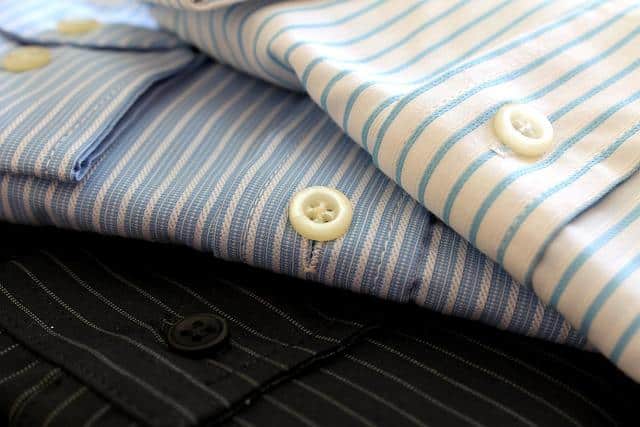
If your closet hides a stack of too-big button-downs (or you can’t resist the $5 rack at the thrift store), you’re sitting on a goldmine. Men’s shirts are quietly perfect for upcycling into women’s dresses and tops: crisp cotton and linen, generous cuts, sturdy seams, and those long button plackets that do half the styling for you. Plus, stripes and plaids make instant design details without you lifting a ruler.
In this guide, we’ll turn everyday shirts into wearable pieces you’ll actually reach for-think breezy shirt dresses, flirty peplum tops, off-the-shoulder numbers, and romantic puff sleeves. Most projects are beginner-friendly, many are afternoon makes, and a few are even no-sew with clever elastic, ties, or fabric glue. You don’t need a dress form or fancy tools; just a shirt, scissors, a bit of thread (or glue), and a willingness to play.
We’ll cover how to choose the right shirts (hint: natural fibers, roomy fits, and interesting collars), what to check before you buy, and smart ways to reuse what’s already there-hems, button plackets, cuffs, and pockets-so you do less cutting and more creating. Whether you’re sewing to save money, reduce waste, build a unique wardrobe, or all of the above, this is your invitation to raid the men’s section and make it your own. Ready to flip a shirt into something fabulous? Let’s start.
Table of Contents
- Pick the right mens shirt fiber weave and pattern placement Oxford versus poplin and how prints behave
- Cut plans that waste less turn a button down into a wrap dress a shirtdress or a tie front top
- Fitting that flatters add bust darts elastic waist casings and shaped side seams for curves
- Professional finishes clean hems stable necklines tidy button plackets plus care and styling tips
- The Way Forward
Pick the right mens shirt fiber weave and pattern placement Oxford versus poplin and how prints behave
Fabric personalities matter when you’re turning a button-down into a breezy dress or flirty top. Oxford (basket weave) is beefier, softly textured, and slightly spongy-great for structure where you want skim-not-cling silhouettes, gathered skirts, and statement collars. It hides seam impressions and old stitch lines better, presses beautifully, and stands up to elastic channels and pockets. Poplin (plain weave) is smooth, crisp, and lighter; it drapes closer to the body and can reveal puckers or pocket “ghosts,” so consider a lining or facing where you need opacity. 100% cotton breathes and presses like a dream; cotton-poly blends resist wrinkles but can spring back when shaping darts. Linen-blend shirts deliver airy drape with slub texture-pre-steam to relax shrinkage before cutting, and mind fray on delicate edges.
- Choose Oxford for A-line shifts, boxy crops, tiered skirts, puff sleeves, and defined waistbands.
- Choose Poplin for ruffles, shirring, tie-front blouses, peplums, and bias-cut flounces.
- Opacity check: hold fabric to light; if you see seam shadows, add a facing, double yoke, or place that panel at the back.
- Stitch smart: fine needle and shorter stitch for poplin; slightly longer stitch and firm press for Oxford.
Prints have opinions, too. Directional florals and novelty motifs need the same “up” across bodice, sleeves, and skirt panels; stripes and checks love symmetry but also create drama when cut on the bias for chevrons at the waist or yoke. Large-scale prints can overwhelm small bodices-crop and recenter a hero motif at the waist or neckline, and avoid a bullseye over the bust. With plaids, match horizontally at side seams and align the button placket as your center anchor; with stripes, vertical lines lengthen and slim, while horizontal stripes on a yoke broaden shoulders in a flattering way. Keep grainlines honest-poplin is less forgiving off-grain, while Oxford tolerates subtle easing without rippling. Use leftover cuffs, plackets, or a second shirt to create pattern-balanced inserts where yardage runs short.
- Pocket ghosting: hide it under a patch pocket, applique, lace panel, or reposition that area into a gathered tier.
- Plaid strategy: cut both fronts together; mirror the yoke for a clean center-back match.
- Stripe play: bias-cut ruffles and waist ties for movement; keep bodice pieces on-grain to avoid twist.
- Motif placement: center a bloom at the waist or neckline-not the bust apex; place high-contrast motifs away from the tummy.
- Seam camouflage: run seams through darker lines in checks/stripes so any slight mismatch disappears.
Cut plans that waste less turn a button down into a wrap dress a shirtdress or a tie front top
Think of the shirt as a ready-made fabric map: the placket becomes your closure, the yoke becomes shoulder structure, the sleeves morph into ties or facings, and the curved hem gives you shape without extra cutting. To minimize scraps, nest pieces along existing seams and keep as many finished edges as possible-hems, button bands, and sleeve plackets do a lot of the work for you.
- Wrap dress plan: Use the existing button band as the overlap edge; harvest one sleeve for long waist ties (cut on the bias for a gentle drape), and piece tie extensions from the other sleeve cuff. The back panel becomes the skirt front; the original front panels wrap and cross. Keep the curved shirt hem as the dress hem.
- Shirtdress plan: Keep the front buttoning intact for a clean center-front; drop the shoulder slightly by using the yoke as a built-in shoulder panel. Add side godets from underarm offcuts for sweep. Cuffs become belt carriers; collar stand re-cut as a neat neckband.
- Tie-front top plan: Crop just above the hip; split the lower front into tapered tails using the bottom placket as a focal point. Sleeve caps become bias facings; remaining sleeve length turns into a short roll-up sleeve with the original placket as a detail.
- Zero-waste placements: Cut pocket bags, facings, and gussets from collar/cuff pieces; align new side seams with the shirt’s existing side seams to save seam allowance; use button spacing as your built-in fit markers.
Sewing is just as resource-savvy: build from the neckline and shoulders down, then finesse the waist last for flexible fit. Lean on clean finishes that don’t eat fabric-French seams on straight runs, narrow hems on curves, and bias from sleeve offcuts for soft edges.
- Assembly order: Join shoulders (preserving the yoke), finish neckline with a collar stand re-cut as a band, then set sleeves or finish armholes. Close side seams and insert godets or gussets if needed.
- Fit hacks: Convert bust darts into soft gathers along the button band; hide a small elastic channel at the back waist using the former sleeve placket; add a discreet inside tie (from collar tips) to secure the wrap.
- Closures & details: Keep original buttons for the center-front or wrap anchor; use cuffs as ready-made belt loops; place patch pockets using the chest pocket as a template or flip it to the skirt for balance.
- Finishing: Preserve the shirt hem whenever possible; bind raw edges with sleeve-cut bias; topstitch along existing seam lines to make the transformation look intentional and couture-clean.
Fitting that flatters add bust darts elastic waist casings and shaped side seams for curves
Transform a boxy button-down into something body-loving by sculpting the chest first. Add bust darts where your shape needs it: mark your bust apex while wearing the shirt, then chalk a gentle side or French dart that aims toward (not into) the apex, stopping about 2.5 cm/1 in before it. Baste, try on, refine, then stitch and press the dart downward for softness. On striped or plaid shirts, align dart legs with the print to keep the pattern looking intentional. A crisp topstitch along the dart can read as a design feature, especially on oxford and denim weaves.
- Placement: Side darts flatter most figures; French darts (from waist to bust) add elegant shaping on longer shirts.
- Angle: Aim darts slightly upward toward the apex; avoid pointing directly at it.
- Length: Stop 2-3 cm (3/4-1 1/4 in) from the apex for a natural slope-no pointy silhouettes.
- Pressing: Press over a tailor’s ham for curve; steam and cool to set without shine.
Next, carve in a waist and create flow. Stitch a simple elastic waist casing at your natural waist or just under the bust: mark the line all around, apply a narrow bias or turn the fabric to form a tunnel, thread elastic, and anchor at side seams to prevent twisting. For extra hourglass, draw shaped side seams that nip in at the waist and blend out to hip or hem-subtle on tops, deeper on dresses. Keep curves smooth, mirror both sides, and true the hem after shaping so it hangs evenly.
- Casing choices: Inner bias tunnel, folded facing, or reuse the shirt’s back yoke seam allowance for a hidden channel.
- Elastic fit: Cut 5-8 cm (2-3 in) smaller than your waist; test for comfort before closing the casing.
- Side seam curve: Start with 0.6-1.2 cm (1/4-1/2 in) intake per side at the waist; blend to nothing at bust and hip.
- Finish: Staystitch armholes before reshaping, and serge/pink new seams to prevent fray on poplin and chambray.
Professional finishes clean hems stable necklines tidy button plackets plus care and styling tips
Give your remake that boutique polish by treating each edge with care. Press every seam, stabilize areas that take stress, and finish raw edges before they fray. A touch of interfacing, precise topstitching, and the right needle-thread combo turn a casual cut-and-sew into a garment that looks intentionally designed. Keep curves smooth with staystitching, refine edges with bias facings, and upgrade hemlines for flow and bounce.
- Hems: Try a narrow rolled hem, baby hem, or twin-needle finish; press with steam and shape over a tailor’s ham for curved hemlines.
- Necklines: Staystitch before handling; use bias binding or a facing with lightweight fusible; understitch to keep the edge from rolling out.
- Plackets: Interface bands lightly, square the ends, edge-stitch at 1-2 mm; add a bar tack at the bottom for durability.
- Seams: French seams or overlock/zigzag to seal raw edges; trim bulk at intersections; grade layers for a flatter finish.
- Tools: Microtex/Universal 70-80 needle, fine poly thread, edge-stitch foot; mark with washable pen and remove stitches as you press.
Once stitched, treat your piece like the unique wardrobe hero it is. Gentle care keeps fibers smooth, while smart styling lets you wear it multiple ways-from brunch-ready dress to layered top. Rotate accessories to change the mood, and adjust the silhouette with belts, ties, and clever tucks.
- Care: Wash cool on delicate or handwash; use a mesh bag; hang or lay flat to dry; press on cotton/steam with a cloth over fusibles and labels.
- Maintenance: Reinforce buttons with cross-stitching; add clear nail polish to thread knots; clip stray threads; store on padded hangers.
- Fit tweaks: Cinch with a belt, elastic waist, or drawcord; cuff or roll sleeves; add darts or side ties later if you want more shape.
- Styling: Layer over a turtleneck, under a blazer, or with bike shorts; swap shoes (sneakers vs. strappy sandals) to shift the vibe.
- Accessorize: Play with statement collars, scarves, and bold earrings; a contrast button set can instantly elevate the look.
The Way Forward
And that’s a wrap! Who knew a classic button-down could turn into a flirty top or a twirl-worthy dress with just a few cuts and stitches? Upcycling men’s shirts isn’t about perfection-it’s about play, personality, and giving good fabric a second life. Your closet gets fresh pieces, your wallet gets a break, and the planet gets a little love.
If you’re on a roll, try:
– Turning leftover cuffs into sleeve ties or bows
– Using the button placket as a decorative strap or neckline detail
– Piecing scraps into a tiered skirt panel or ruffle
– Making matching scrunchies or headbands to use every last bit
I’d love to see what you make-share your photos and tag them with your favorite upcycling hashtag so we can cheer you on. Got questions or ideas? Drop them in the comments. If you enjoyed this, subscribe for more refashion projects, thrifting tips, and easy patterns.
Now go raid that closet or thrift rack and sew something that makes you smile. Happy upcycling!
