
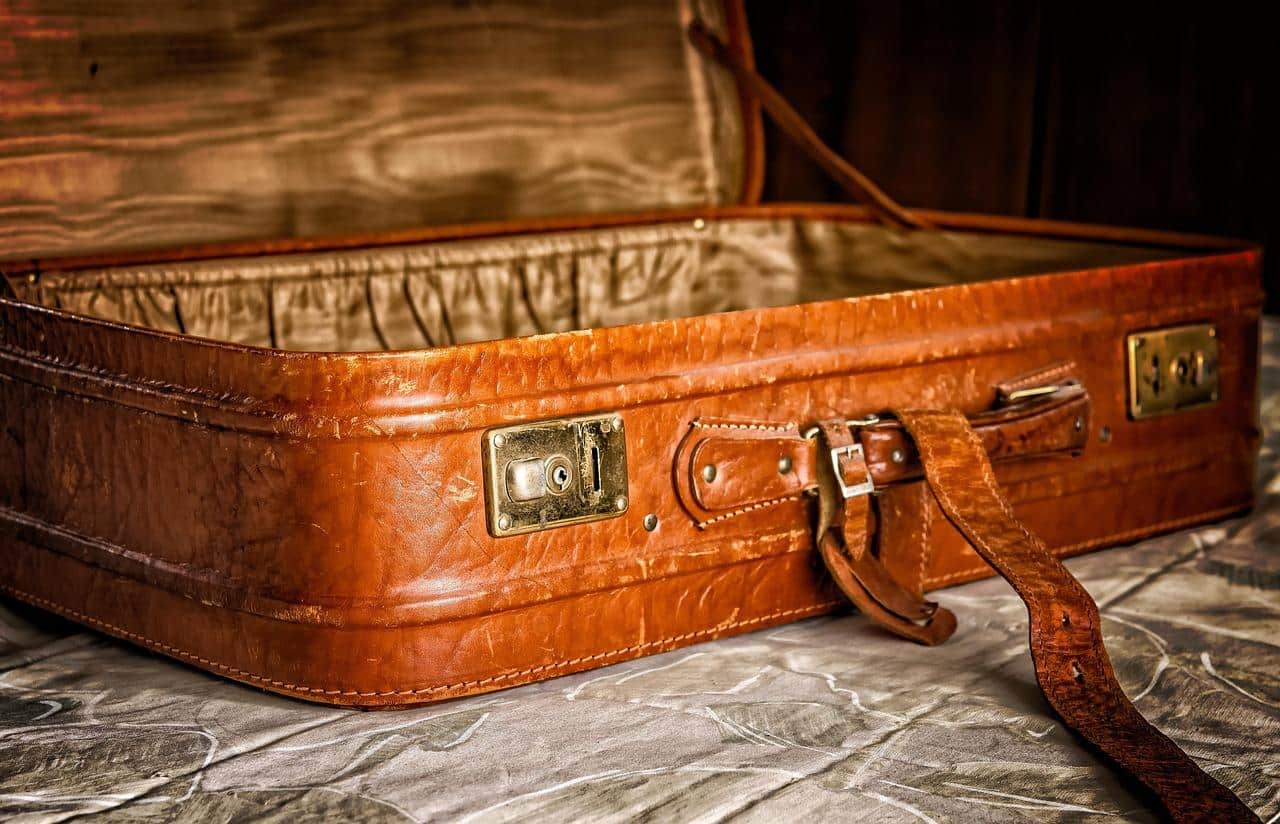
Before wheels and telescoping handles, travel meant trunks that needed two bellhops and a sense of adventure. Vintage luggage-scuffed leather valises, brass‑latched steamer trunks, tweed train cases with satin linings-does more than haul belongings. It carries the romance of ocean liners, grand hotels, and the first jet-age boarding calls, each sticker and scratch a postcard from a place and time.
If you’ve ever run your hand over an old trunk’s cool hardware or caught a whiff of cedar and old paper, you know the pull. These pieces sit at the crossroads of fashion and function: crafted to survive rough crossings, styled to signal status, and engineered with clever compartments for hats, gowns, and the odd contraband bottle. From monogrammed canvas built for Atlantic crossings to vulcanized‑fiber cases that lightened the load for railway porters, luggage has always mirrored how the world moved-and who got to move through it.
In this article, we’re unpacking the story of vintage travel luggage: how design evolved from steamer trunks to sleek jet-set carry‑ons, why certain makers became icons, what those travel stickers and baggage tags reveal, and how craftsmanship and materials shaped the journey. We’ll also touch on collecting and caring for old pieces, decoding dates and details, and why a scuffed suitcase feels so right in an age of identical polycarbonate shells.
Grab your (imaginary) porter. It’s time to lift the lid on the bags that carried the golden age of travel.
Table of Contents
- From Steamships to the Jet Age: How Materials and Design Evolved
- Decoding Maker Marks and Hardware to Date Your Suitcase
- What to Look For When Buying: Condition, Restoration Potential and Value
- Caring for Old Leather and Canvas: Cleaning, Storage and Repair Tips
- Future Outlook
From Steamships to the Jet Age: How Materials and Design Evolved
On the docks of grand liners, luggage was more like portable furniture than carry-on. Early steamer trunks sat atop stout wooden frames, clad in rugged canvas and cinched with leather bindings, their edges armoured in brass to survive cranes, salt spray, and long crossings. Domed lids shed rain, slatted ribs resisted crushing, and interior fittings-drawers, hat cradles, and fold-out hangers-turned a trunk into a traveling wardrobe. Waterproofing meant tarred canvas, shellac, and oiled hides; personalization meant monograms, route labels, and hotel decals. Form didn’t just follow function-it was a quiet boast of endurance and status.
- Ocean-going era: domed tops, nailed slats, canvas duck, heavy brass hasps, leather corners.
- Rail refinement: flat-top trunks for stacking, vulcanized fibre and laminated boards, tidy Art Deco hardware, fitted compartments.
- Early flight: slimmer cases sized for racks, aluminum ribs and shells, early fiberglass forms, gaskets and the rising dominance of the zipper.
As travel sped up-from platforms to pressurized cabins-luggage shed bulk for agility. Timber cores gave way to vulcanized fibreboard and light laminates; riveted aluminum and resilient fiberglass brought strength without weight. Oversized straps were replaced by flush locks and smooth zips; chunky handles evolved into low-profile grips, then early telescoping pulls. Interiors traded steamer drawers for elasticized pockets and garment sleeves, while exteriors adopted sleek lines, anodized sheens, and color-matched sets built for quick transfers. Look closely and you can “read” the decade in every detail-from corner caps and hinge profiles to the way a case stacks, seals, and shines.
Decoding Maker Marks and Hardware to Date Your Suitcase
Start with the nameplate and labels: makers often left a breadcrumb trail. Look for embossed logos on leather, enamel plaques on the frame, paper labels under the lid, and retailer badges inside pockets. Changes in fonts, logo shapes, and address lines (street vs. showroom, city vs. country) can narrow a decade. Serial or model numbers stamped near a lock or hinge sometimes relate to catalog runs, and patent numbers can be traced to filing dates. Don’t overlook travel-shop collaborations-phrases like “for” or “by” after a department store name usually point to a specific partnership era. If a mark is faint, raking light or a soft pencil rubbing can reveal hidden lettering without harming the surface.
- Zippers: Talon and Lightning pulls are common pre-1970; widespread YKK adoption arrives mid-1960s onward; early pulls are beefier with rectangular stops.
- Locks: Brass with warm patina suggests pre-1960; mirror-bright chrome is more mid-century. Stamps like Excelsior, Eagle Lock Co., or Corbin help triangulate origin and timeframe.
- Screws: Slotted heads dominate pre-WWII; Phillips becomes common post-1940s. Uniform Phillips across all fittings can indicate later service or replacement.
- Handles: Stitched leather and wrapped fiber predate molded plastics; cracked bakelite-like grips hint at 1930s-50s.
- Country-of-origin: “Made in Occupied Japan” (1945-1952), “US Zone Germany” (late 1940s), “West Germany” (1949-1990) are precise dating clues.
- Rivets & corners: Domed brass rivets and raw-edge fiber corners read earlier than anodized or powder-coated hardware.
- Patent language: “Pat. Pend.” often precedes a short production window; full patent numbers let you anchor a not-earlier-than date.
Read the suitcase like a timeline of upgrades: match the branding to a catalog decade, then test that hypothesis against the fittings. Mixed signals-say, a 1930s label with modern zips-often mean repairs or refits. Aim for a date range rather than a single year, photograph every mark, and compare with period ads or museum archives. When details disagree, trust the least replaceable parts (frames, hinge plates, corner hardware) over easily swapped items like pulls and keys; they’re the quiet historians that rarely lie.
What to Look For When Buying: Condition, Restoration Potential and Value
Start with structure, then zoom into details. Sight a piece from a few feet away-does it stand square, sit flat, and close evenly? Warp, sagging lids, and sprung frames signal expensive fixes. Run your fingers along the seams: tight stitching, firm corners, and intact edge binding suggest a life well-traveled but not abused. Check surfaces for cracks in leather or brittle canvas, veneer lifting, or flaking fiberboard; a gentle patina is desirable, active deterioration is not. Work every hinge, lock, and clasp: they should move smoothly and sit flush; mismatched hardware often hints at past breakage. Peek inside for water tide lines, rust blooms, or fuzzy mold, and note whether trays, hangers, and the original key are present. Trust your nose-persistent mildew or smoke is hard to banish. Finally, scan for maker marks, serial stamps, and aligned monograms at seams; authenticity lives in the small, consistent details.
- Corners and seams: Look for tight stitches, firm edging, and a boxy silhouette with no wobble.
- Surface health: Pliable leather and non-brittle canvas age better than dried, cracked materials.
- Hardware check: Hinges, locks, and latches should open/close cleanly; matching screws and period-correct parts matter.
- Interior tells: Light foxing is manageable; active mold and deep water staining are costly to remedy.
- Odor test: Musty, smoky, or mothball-heavy scents can be stubborn-budget time and treatment if you proceed.
- Completeness: Trays, dividers, hangers, and keys add both usability and value; missing pieces reduce it.
- Monogram alignment: Consistent pattern flow at seams is a quick authenticity cue on branded canvases.
Weigh restoration against the story-and the market. Gentle cleaning, leather conditioning, re-stitching corners, polishing brass, and replacing missing screws are worthwhile “invisible” improvements; re-lining, frame repair, lock replacement, or re-dyeing are specialist jobs that may outpace resale gains. Preserve travel labels, shipping tags, and period decals-erasing them erases provenance. Keep original hardware whenever possible; swaps and over-restoration can sterilize character and clip value. Before you buy, price out any fixes and compare to recent sales of similar pieces in comparable condition. When in doubt, choose the best example you can afford; superior structure plus honest patina outruns a bargain project with structural headaches.
- Value drivers: Renowned makers, early eras (steamship/Art Deco), scarce colors or textures, and complete interiors.
- Size and use: Cabin trunks and train cases suit modern spaces; large steamers excel as coffee tables or storage.
- Provenance: Hotel labels, route tags, and documented ownership lift desirability-don’t peel them off.
- Originality: Matching hardware, undisturbed finishes, and period-correct parts typically command premiums.
- Costs beyond purchase: Restoration, shipping, and space considerations shape true ownership value.
- Sets and pairs: Nesting pieces or coordinated pairs often sell for more than the sum of their parts.
Caring for Old Leather and Canvas: Cleaning, Storage and Repair Tips
Gentle cleaning keeps patina while lifting decades of dust. Start with a soft brush or microfiber to wake the grain, then test any product on a hidden seam. For leather, use a barely damp cloth with distilled water and a pea-sized touch of pH-balanced cleaner; dry immediately and finish with a thin layer of conservation-grade conditioner (avoid heavy oils that can darken). For canvas, spot-clean only: cool water + mild, pH-neutral soap, blot-never scrub-to protect the weave and printed logos. If you meet mildew, air the piece in indirect sun, then wipe: leather with a very light pass of 70% isopropyl alcohol cut 1:1 with water (follow with conditioner), canvas with a 1:1 white vinegar solution; always dry thoroughly.
- Leather: Dust, wipe lightly, dry, then condition sparingly; buff with a clean cloth for a soft sheen.
- Canvas: Vacuum with a soft brush, dab stains, support panels from behind while cleaning to prevent puckering.
- Hardware: Mask surrounding material; clean with a cotton swab and microcrystalline wax-skip harsh, ammonia polishes.
- Odors: Tuck sachets of baking soda or activated charcoal inside for 24-48 hours; avoid perfumed sprays.
To preserve structure, think cool, dry, dark. Aim for 45-55% relative humidity and steady temperatures; stuff bodies and corners with acid-free tissue, rest straps flat, and cover with breathable cotton-not plastic. Store horizontally with light padding between pieces, and rotate display to prevent handle stress. For small fixes: re-wax dry edges, saddle-stitch loose seams with waxed linen thread through existing holes, and ease sticky zips with beeswax or paraffin. Cracks in leather can be softened but not erased; canvas delamination should be stabilized with a tiny amount of pH-neutral, conservation-grade PVA-or better, entrusted to a pro for historically sympathetic repairs.
- Storage: Acid-free tissue forms, cotton dust covers, silica gel packs conditioned for your climate; keep off floors and away from heaters/windows.
- Edges & straps: A whisper of leather balm on dry edges; never over-saturate.
- Stitching: If thread fails, use a curved needle to follow existing holes; avoid punching new ones.
- Zippers & locks: Wax teeth lightly; for squeaky hinges, a micro-drop of sewing machine oil applied with a toothpick-wipe excess.
Future Outlook
In the end, vintage travel luggage isn’t just baggage-it’s a passport to the past. Every scuff, sticker, and brass latch hints at a journey taken, a person who packed with purpose, and an era when the trip was as romantic as the destination.
If this story stirred your inner explorer, keep an eye out at flea markets, estate sales, and even your family attic. Rescue a piece, give it a gentle clean, and let it live on as a weekend bag, a coffee-table conversation starter, or a beautiful storage solution.
Got a favorite find or a trunk with a tale? Share it in the comments-I’d love to hear it. And if you want a quick guide to caring for old leather and spotting quality construction, tell me; I’ll put one together next. Until then, happy hunting and safe travels-wherever your luggage takes you.
