
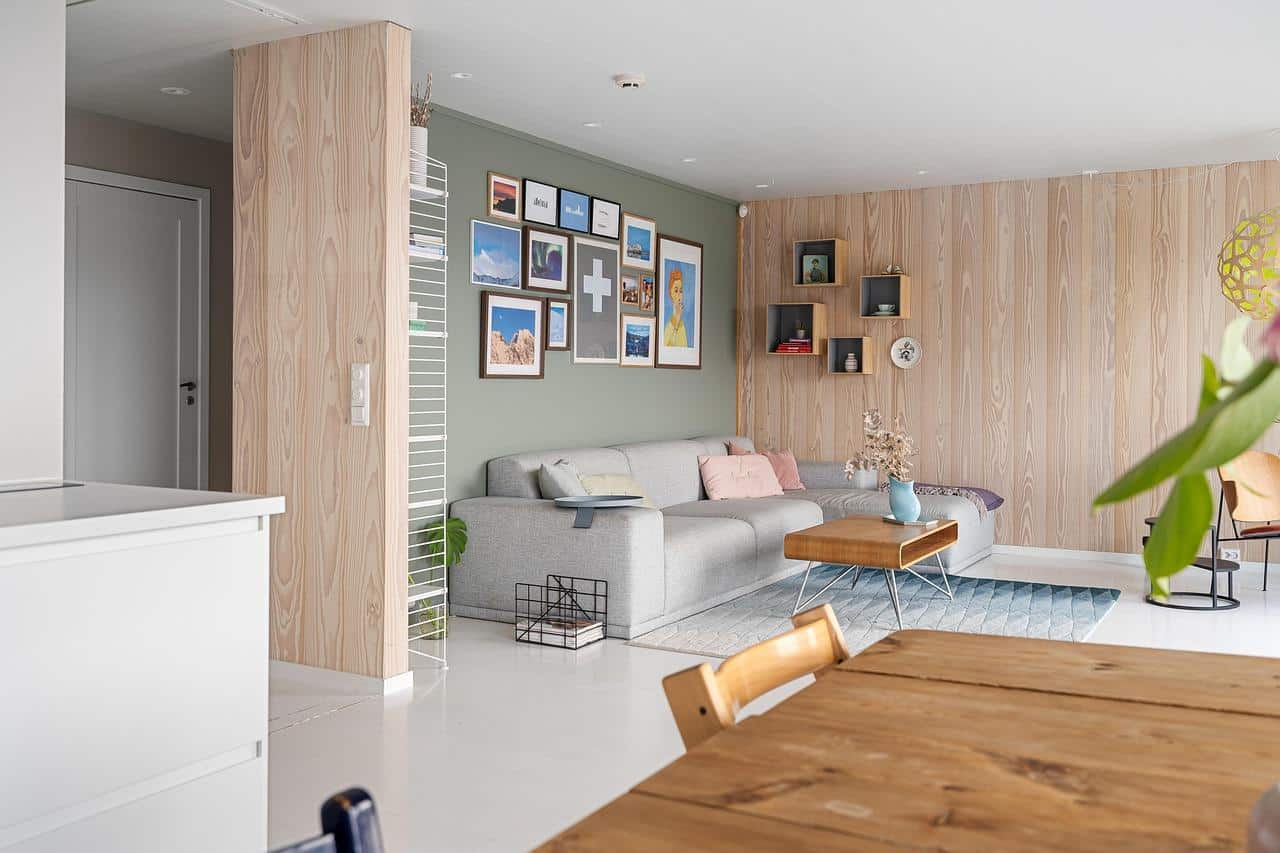
There’s a special kind of warmth that happens when a blank wall turns into a story-one told in sepia tones, soft edges, and the gentle patina of time. A gallery wall of vintage prints doesn’t just decorate a room; it wraps it in character, nostalgia, and a lived‑in charm that feels like home on a rainy Sunday.
If you’ve ever stood with a stack of frames and zero plan (hi, same), this guide is your friendly shortcut. We’ll walk through choosing a cozy color palette, finding vintage art-whether you’re thrifting, downloading public-domain gems, or printing family photos-plus smart framing and matting that make everything look intentional, not matchy. You’ll learn how to mix sizes and styles, lay out a balanced arrangement on the floor first, and hang it without a measuring marathon or twenty extra nail holes.
Think of this as curating your own little museum: botanical studies, old maps, portrait miniatures, and travel etchings gathered into a warm, layered moment. Nothing has to be perfect to feel perfectly you-and by the end, you’ll have a gallery wall that looks collected over time, even if you pulled it together in an afternoon. Let’s make something cozy.
Table of Contents
- Choose a theme and cozy palette that ties everything together
- Find real vintage prints with sourcing tips and red flags to avoid
- Frame and mat like a pro with archival materials and mix and match finishes
- Plan the layout with paper templates ideal spacing and secure hanging hardware
- Key Takeaways
Choose a theme and cozy palette that ties everything together
Start with a story and let your images orbit around it. Choose a vibe-think cottage core botanicals, sepia-tinted travel moments, or moody literary prints-and let that thread guide what makes the cut. Cozy isn’t just color; it’s also texture and patina. Mix weathered wood with antique brass, lean into buttery paper tones, and pick art that shares a similar mood (soft light, quiet scenes, hand-drawn lines). Aim for a quietly cohesive feel where nothing screams for attention, but everything whispers the same tale.
- Hearth & Honey: caramel, wheat, cream, inky black
- Fireside Forest: sage, deep olive, bark brown, warm brass
- Winter Light: mushroom gray, linen, charcoal, dusty rose
- Mulled Berry: fig, russet, blush, antique gold
Keep the mix intentional by repeating tones and finishes. Choose one dominant hue, two supporting shades, and a single metal to echo across frames, mat borders, and even hanging hardware. Vintage prints often vary in paper color; unify them with mats in the same temperature (all warm ivories or all cool creams) and lean on consistent undertones-warm woods with warm art, cool blacks with cool grays. When in doubt, pull colors directly from your favorite print and let those steer everything else.
- Limit the palette to 3-5 colors for visual calm.
- Repeat a key accent every two or three frames for rhythm.
- Mix wood tones only if they share a warm or cool undertone.
- Use linen or off-white mats to soften contrast and add texture.
- Finish with one metal (antique brass, oil-rubbed bronze) for subtle cohesion.
Find real vintage prints with sourcing tips and red flags to avoid
Hunting down the good stuff is half the joy. Start by scouring estate sales, print fairs, and trusted antiquarian print dealers, then widen your net to library deaccession sales and museum shop “works on paper.” When buying online, read closely and request backside photos-authenticity often lives in the margins. Learn the language: terms like engraving, etching, lithograph, and photogravure describe real processes; “poster” and “giclée” usually mean modern reproduction.
- Feel the paper (if in person): Older rag papers have a soft, fibrous hand; look for chain lines or a watermark when held to light.
- Seek a plate mark: Intaglio prints (etchings/engravings) leave a shallow embossed ridge around the image.
- Use magnification: Real prints show ink texture (crisp engraved lines, litho crayon grain). A CMYK dot rosette reveals offset/inkjet.
- Check the margins: Honest age shows toning, foxing, or mat burn near old frame lines-not just the image area.
- Confirm authorship details: Pencil signatures, titles, and edition notes should be graphite on the paper, not printed in the image.
- Ask for provenance: Dealer invoices, gallery labels, or collection stamps add confidence and context.
A few tells can save your budget and your wall. Be wary of pieces that look “perfectly old” yet lack the subtle irregularities of time and handwork. If something famous is priced like a café print, it probably is.
- Uniform sepia tint with no paper variation: Often a faux-aging filter on a modern print.
- Glossy, bright-white stock: Vintage papers rarely have optical brighteners or a photo-like sheen.
- No plate mark on an “etching”: A mismatch between the claimed process and the physical evidence.
- Pixel/dot pattern under a loupe: Indicates digital or offset reproduction, not a period print.
- Vague language: “After [artist],” “in the style of,” “vintage-inspired,” or “giclée” = reproduction.
- Hidden edges: Frames that can’t be opened or sellers who won’t share back/edge photos are red flags.
- Too-big dimensions: Many originals were modestly sized; oversized “vintage” sheets may be modern decor prints.
- Fresh, even “tea staining” or fake deckle edges: Looks aged, but not aged right.
Frame and mat like a pro with archival materials and mix and match finishes
Treat those timeworn beauties with museum-level care so they age gracefully, not yellow. Opt for conservation-grade mats (100% cotton rag or high-quality alpha-cellulose), pair with lignin-free backing, and finish with UV-filter glazing to guard against fading. Float delicate deckled edges, or cut a window that reveals a whisper of the paper’s border; add spacers or a 4-8 ply mat to keep the print from touching the glazing. Always use reversible hinges (Japanese paper + wheat starch paste) and skip pressure-sensitive tapes. A slightly heavier bottom margin (optical weight) looks custom-and helps vintage pieces feel intentionally placed.
- Mats: 4-ply for subtle depth; 8-ply for gallery drama. Buffered for most prints; unbuffered for cyanotypes, albumen, and delicate dyes.
- Backing: Museum board or inert polypropylene (Coroplast) to prevent warping and off-gassing.
- Glazing: Non-glare, 99% UV acrylic or glass (Optium/Museum grades) for clarity without reflections.
- Breathing room: Use spacers to avoid emulsion sticking; add an acid-free dust cover, not airtight.
- Hardware: D-rings and coated wire keep frames level and walls safe.
For a cozy, collected look, blend profiles the way you’d layer sweaters: mix textures and tones but repeat each finish at least three times for harmony. Anchor with one wood tone, one dark neutral, and a soft metal-then keep mats consistent (warm white or ivory) so the art sings. Vary frame profiles-thin, chunky, beaded-while aligning outer edges for rhythm across the wall. A touch of patina (aged brass, charcoal steel, oiled walnut) warms up vintage imagery, and a few float mounts add airiness among standard windows.
- Combos to try: Walnut + antique brass + matte ivory mats.
- Moody mix: Blackened steel + ebonized oak + low-reflection glazing.
- Soft & cozy: Honey maple + champagne metal + linen-texture mats.
- Balance tips: Heavier frames low, lighter ones high; echo a finish in at least three spots; keep mat reveals consistent for cohesion.
Plan the layout with paper templates ideal spacing and secure hanging hardware
Grab a roll of kraft paper and trace each frame to make life-size templates-label them with a quick note like “Botanical, 9×12” and the frame’s weight. Use low-tack painter’s tape to shuffle these ghosts of your gallery across the wall until the composition feels balanced. Start with a visual anchor at eye level (roughly 57-60 inches to center), then build out with pairs and clusters. Aim for consistent gaps-about 2 inches (5 cm) for cozy, intimate walls or 3 inches (7.5 cm) if your space can breathe-keeping edges aligned in rows, centers, or a soft diagonal. Snap a photo of your mock-up and tweak until it sings; a strip of tape as a “horizon line” helps keep everything straight.
- Template tips: mark the top-center of each paper with a dot and write the hanging-point measurement (from frame top to hardware) right on it.
- Mix with intention: alternate ornate and simple frames, and repeat one accent color or metal to unify the set.
- Mind the furniture: leave 4-8 inches between a sofa or console and the lowest frame.
- Check sightlines: step back, squat, and view from the room’s main entry-adjust for glare, switches, and vents.
Once the layout is locked, mark nail spots directly through the paper and choose hardware that matches both wall type and frame weight. For plaster or drywall without a stud, use rated anchors; for brick or concrete, go masonry screws. Heavy or heirloom pieces deserve D-rings with two hooks or a French cleat; lighter frames can use sawtooth or wire. Add felt bumpers and a dab of museum putty at the bottom corners to stop shifting and protect paint. Before hanging, measure the drop: from the frame’s top to its hanging point-transfer that to your template so nails land perfectly, keeping your 2-3 inch spacing consistent across the whole wall.
- Hardware cheat sheet: up to 5 lb: small nail or Command hook; 5-20 lb: D-rings + two nails or medium anchors; 20-75 lb: heavy-duty anchors or cleat.
- Two-point hang: doubles stability and makes micro-leveling a breeze.
- Level smarter: use a laser level or a phone app; fine-tune with the bumpers.
- Renters: test removable hooks on a low-visibility spot and keep to the lighter frames.
Key Takeaways
And there you have it-your roadmap to turning a blank wall into a warm, story-filled corner. Remember, a cozy gallery wall isn’t about perfection; it’s about personality. Let it evolve, swap pieces with the seasons, and lean into the quirks that make your home feel like you.
Quick start nudge:
– Pick a mood (sepia and warm neutrals are timeless).
– Start with 7-9 pieces and one confident anchor.
– Mix frame finishes and play with mat widths.
– Map the layout on the floor, then test with painter’s tape.
– Add soft lighting and one unexpected element, like a tiny mirror or textile.
If you put one together, I’d love to see it-share a photo and tag me, or drop your favorite vintage art sources in the comments. Want more cozy home ideas and vintage finds? Subscribe so you don’t miss the next guide.
Here’s to walls that tell your story, one print at a time. Happy hanging!
