
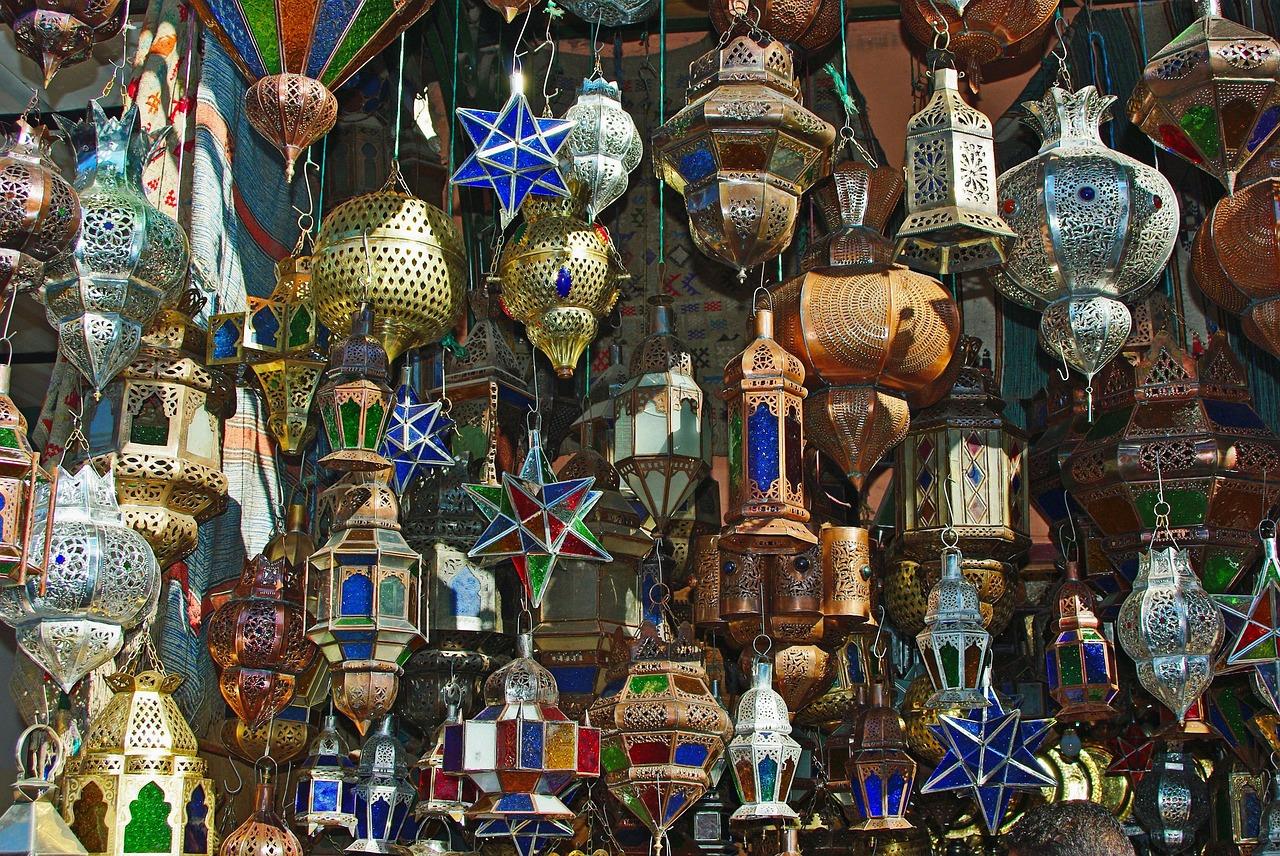
Step into Marrakech’s medina and your map becomes more suggestion than guide. The souks unfurl in a warm, fragrant maze where saffron dusts the air, copper lanterns wink from shadowed doorways, and pyramids of olives glisten like jewels. This isn’t a mall-it’s a conversation-where bargaining is playful, mint tea is a welcome, and getting a little lost is half the point.
On my first wander, I followed the color: skeins of sun-bright wool hanging in the Dyers’ Souk, rows of butter-soft leather slippers, stacks of hand-painted tagines. Hammers rang from the metalworkers’ corner, while in Rahba Kedima square, baskets and spices spilled into a patchwork of earthy tones. Every turn offered a new vignette: a cat dozing on kilims, a smile from a vendor proud of his craft, the distant thrum of Jemaa el-Fna pulling you like a heartbeat.
This flea-market adventure is for the curious and the unhurried. Come ready to meander, chat, sip, and discover-whether you’re hunting for a rug with a story, a handful of argan oil treasures, or simply the pleasure of being swept up in the souk’s gentle chaos. In the pages ahead, I’ll share where to start, how to haggle without stress, and the little detours that made getting lost the best part of the day.
Table of Contents
- Start early at Rahba Kedima Square then drift toward Souk Semmarine and the color soaked alleys of Souk des Teinturiers
- Smart buys and what to skip hand knotted rugs babouche slippers brass lanterns and how to spot real argan oil
- Haggle like a local friendly Arabic phrases fair counteroffers and when to walk away with a smile
- Where to rest and refuel mint tea at Cafe des Epices street food at Jemaa el Fnaa and a quiet exit via Mouassine
- Key Takeaways
Start early at Rahba Kedima Square then drift toward Souk Semmarine and the color soaked alleys of Souk des Teinturiers
Arrive with the hush of first light as Rahba Kedima stirs awake-spice pyramids smoldering with aroma, woven baskets stacked like sunbursts, and apothecaries lining up glass vials that catch the morning glow. Order a quick mint tea, watch vendors chalk prices on slate, then make your earliest, friendliest offers while the day is still cool. Greet with a warm salaam alaikum, smile often, and treat bargaining as a conversation, not a contest-the best finds feel like a shared win. Keep small bills handy, linger to learn, and let your nose lead you to saffron, cumin, and cedarwood tucked behind counters of brass and leather.
- Cash is king: Carry small change and avoid flashing large notes.
- Start softly: Counter at around half the price, then meet in the middle with good humor.
- Ask before you snap: Seek permission for portraits and artisan shots.
- Quality checks: Look for tight stitching on baskets, even grind on spices, and smooth zippers on leather.
- Learn a phrase: “Bsh-hal?” (How much?) and “Shukran” (Thank you) go a long way.
Slip under the latticed shade of Souk Semmarine where babouches glow like citrus and hammered teapots wink from the gloom, then meander toward the dyers’ quarter where skeins of wool drip indigo, madder, and saffron in color-washed alleys. Here, you’ll hear the hiss of vats and see hands stained with work-ask about natural dyes, touch samples for softness, and buy small to pack light. If you’re tempted by rugs or textiles, note the weave density, request a receipt, and have pieces wrapped to protect lighter fabrics from fresh dye. Wander slowly; the best stories in your bag will come from the conversations you take time to have.
- Try & taste: A pinch of ras el hanout on your palm to gauge complexity.
- Hands-on: Test a teapot’s pour and lid fit; listen for a clean, steady stream.
- Textile touch: Compare pile height and back knots; natural fibers feel cool and springy.
- Dyers’ dance: Watch a skein change shade in the vat-ask what plants created it.
- Mini detour: Step into a quiet fondouk courtyard for a breath and a photo.
- Street fuel: Grab a flaky msemen and fresh pomegranate juice before the next haggle.
Smart buys and what to skip hand knotted rugs babouche slippers brass lanterns and how to spot real argan oil
Rugs worth rolling up are the ones with stories woven in. Flip any candidate: a true hand‑knotted piece mirrors the pattern on the back, you’ll see tiny, uneven knots, and the fringe is the rug’s backbone (warp threads), not tacked on. Wool should feel springy, not squeaky, with a soft, lanolin glow rather than a plastic shine. Dyes should be mellow, not neon; a quick dab with a slightly damp white cloth shouldn’t bleed. Expect some wonky charm-perfectly uniform edges usually mean machine‑made. For babouche slippers, go for supple sheepskin or goatskin that bends easily, with stitches you can count and a leather or sturdy rubber sole. They’ll mold to your feet within a day; avoid pairs that smell sharply of solvents or have glossy, varnish‑like coatings that crack.
- Hand‑knotted rug checklist: mirrored backside pattern; integral fringe; irregularities; dense yet flexible handle; colors that don’t rub off; no stiff backing mesh.
- Babouche checklist: soft leather inside and out; visible stitching (not foam‑glued); breathable lining; minimal chemical odor; skip glitter‑heavy tourist versions with cardboard soles.
Lanterns that last are solid brass, not painted steel. Bring a tiny magnet: it won’t cling to real brass. Weight matters, as does a warm, golden tone (not brassy-orange) and smooth, finished edges on the pierced metal. Ask for thicker gauge and check the solder points; flimsy bodies dent before you get them home. If you want it wired, confirm safer rewiring at home-or buy it unwired and convert later. As for argan oil, the real stuff is simple: 100% Argania Spinosa Kernel Oil, cold‑pressed, in dark glass with a harvest or lot date. It smells gently nutty (never perfumed), is fluid rather than syrupy, and sinks in fast without a greasy film. If the price feels suspiciously low for a full bottle, it’s likely cut with cheaper oils.
- Brass lantern cues: magnet doesn’t stick; satisfying heft; clean piercings; consistent patina; avoid flaking “gold” paint and ultra‑light alloys.
- Argan oil cues: one‑ingredient label; opaque glass; subtle, nutty aroma; golden (cosmetic) or deeper amber if roasted (culinary); absorbs quickly on skin; no added fragrance or glitter.
Haggle like a local friendly Arabic phrases fair counteroffers and when to walk away with a smile
In the swirl of saffron, lanterns, and leather, prices are a conversation-warm, playful, and full of charm. Start with a greeting, smile, and try a few local words; you’ll see faces brighten and offers soften. Keep your tone light, admire the craftsmanship, and remember: here, a little Darija goes a long way.
- Salam 3likom – السلام عليكم (Hello/peace be upon you)
- Bsh-hal hadî? – بشحال هادي؟ (How much is this?)
- Ghâli bzzâf – غالي بزاف (That’s very expensive!)
- Nqes shwiya, 3afak – نقص شوية، عفاك (Lower it a bit, please)
- Shnu âkher taman? – شنو آخر ثمن؟ (What’s your best price?)
- Hadî âkher taman dyali – هادي آخر ثمن ديالي (This is my final price)
- Ghir kan chouf – غير كنشوف (I’m just looking)
- Mâshi mushkil – ماشي مشكل (No problem)
- Shukran bzzâf – شكراً بزاف (Thanks a lot)
- Inshallah mara ukhra – إن شاء الله مرة أخرى (Maybe next time)
For a fair dance, start your offer at about 40-50% of the first price, then inch up with good humor. Compliment quality, bundle pieces you love, and keep small bills of dirhams for an easy close. If the vibe turns pushy, the price won’t budge, or your gut says it’s not right, step back gracefully-there’s always another stall with a story to tell.
- Anchor politely: “It’s beautiful, but my budget is X.”
- Bundle smart: Ask, “Wach kayn thaman mzyan ila shetina juj?” (Any better price if I buy two?)
- Read the room: If jokes stop and pressure starts, it’s time to pause.
- Walk-away lines: “Shukran bzzâf, ghadî ndour shwiya” (Thanks, I’ll look around) or “Safi, inshallah mara ukhra.”
- Seal it kindly: If you agree, smile, shake hands, and say “Allah ybârak fik” (Blessings to you).
Where to rest and refuel mint tea at Cafe des Epices street food at Jemaa el Fnaa and a quiet exit via Mouassine
When the souks start to blur into a kaleidoscope, slip up to Café des Épices and let a pot of frothy mint tea reset your pace. From the rooftop, you can watch Rahba Kedima’s spice pyramids glow paprika-red while copper kettles hiss and the breeze carries whispers of cumin and orange blossom. Pair your glass with a simple bite-think warm khobz with olive tapenade or a slice of almond cake-and linger as baskets are hoisted, bargained, and whisked away below. It’s the kind of pause that makes the city feel like a private show.
- Best perch: snag the terrace edge for spice-square views and late-afternoon shade.
- Order like a local: mint tea, fresh orange juice, and a light salad or sandwich for fuel without the slump.
- Carry small change: it speeds things up and keeps tipping easy.
- Heat hack: midday can be fierce-ask for an extra glass of ice or a spritz of ginger lemonade.
As dusk drapes the city, follow the drumbeat to Jemaa el Fnaa, where smoke curls above grill tops and vendors sing out dishes like invitations. Choose a numbered stall, settle on a bench, and graze: slurp a peppery harira, share cumin-dusted brochettes, swipe warm msemen through zaalouk, or dare the cinnamon-scented babbouche (snail broth). When you’re full and glowing, drift northwest into Mouassine-lanes soften, lamps glow amber, and carved cedar doors hush the city. The trickle of the Mouassine Fountain and perfumers’ citrus-laced air make for a gentle glide back to your riad.
- Street-food shortlist: harira, lamb or chicken brochettes, zaalouk, msemen with honey, and a final squeeze of orange juice.
- Street smarts: confirm prices before sitting; a friendly “la, shukran” (no, thank you) keeps things smooth.
- Slip-away route: from the square, angle toward Mouassine Mosque and Dar el Bacha for calmer lanes and artisan ateliers.
- Quiet pauses: the Mouassine Fountain, a tucked-away perfumery, or a tiny gallery with cedar-scented courtyards.
Key Takeaways
By the time the call to prayer threads through the alleys and the lanterns blink awake, Marrakech’s souks feel less like a maze and more like a mood. You’ve haggled with a grin, sipped mint tea you didn’t know you needed, and learned that “getting lost” is just another word for finding what you didn’t know you were looking for-be it a hand-loomed rug, a handful of saffron, or a story told over a shopkeeper’s threshold.
If you go, go slow. Let your feet follow the clink of brass and the swirl of spice, bargain with kindness, and say yes to curiosity. The best treasures aren’t always the ones that fit in your suitcase; sometimes they’re the conversations, the colors you can’t name, the way the city lingers on your skin long after you’ve left the medina.
Have you wandered these markets? Tell me your favorite find-or the price you’re most proud of bargaining down-in the comments. And if Marrakech is still a pin on your map, what would you hunt for first?
Until next time, keep your pockets light, your tote roomy, and your sense of wonder switched on. I’ll meet you under the lanterns.
