
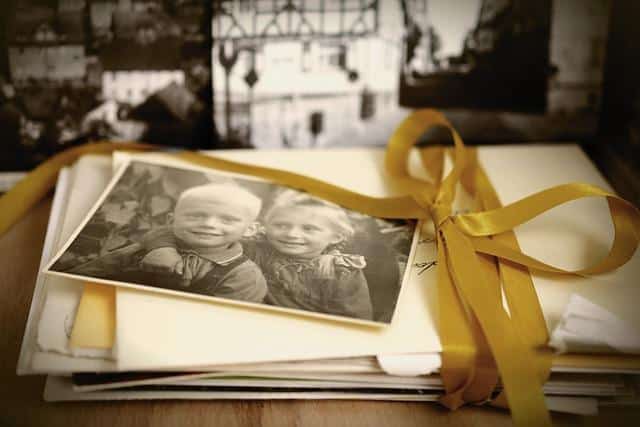
There’s a particular kind of magic that happens when you push open the creaky door of a thrift shop or wander into a sunlit flea market. It’s in the gentle clink of old glassware, the soft hiss of a vinyl record someone decides to test, the whiff of cedar and history. If you’re anything like me, these places feel less like stores and more like time machines-aisles of stories waiting for a willing listener.
I didn’t set out to “collect” anything, at least not in the capital-C collector sense. But over years of Saturday morning hunts and serendipitous curbside rescues, certain pieces found me. A floral Pyrex mixing bowl that stirred a dozen family birthdays. A brass alarm clock that ticks a little impatiently, as if it remembers someone’s train schedule. A pile of postcards with handwriting that loops like ribbon. They’re not perfect; they’re better. Their chips and scuffs are the punctuation marks of lives well-lived.
This post is a love letter to those favorites-my vintage companions-and the memories they’ve unlocked. More than décor, they’re conversation starters, anchors in a fast-moving world, and gentle reminders that good things were made to last. I’ll share where I found them, the stories I’ve discovered (and sometimes imagined), and the small ways they’ve shaped my home and habits, from slower mornings to more mindful, sustainable choices.
So grab your coffee, pull up a chair, and come rummage with me. Maybe you’ll spot something familiar, or maybe you’ll be inspired to dust off a forgotten treasure of your own. After all, the best finds don’t just decorate a room-they make it feel like it’s always had a heartbeat.
Table of Contents
- The story in the details Maker marks fabric tags and patina cues that prove authenticity
- Treasure hunting in the wild My go to sources negotiation scripts and price benchmarks
- Gentle restoration that preserves soul Cleaning repairs and storage methods that extend life
- Styling vintage with purpose Room by room placement color pairing and lighting recommendations
- To Conclude
The story in the details Maker marks fabric tags and patina cues that prove authenticity
Sometimes the most moving memories hide in the tiniest places: a faint hallmark tucked under a collar, a label whose ink has feathered with time, the soft edge of a cuff that’s been thumbed a thousand times before me. I love how these quiet details read like diary entries-typefaces that went out of fashion, care instructions phrased in bygone language, a stitch line that wanders just enough to remind you a real person guided the fabric. Even the glow of aged brass or the sun-fade along an old fold tells you where the piece lived, how it was loved, and why it still feels alive today.
- Hallmarks and stamps: Discreet brand impressions inside waistbands or under hardware, often with era-specific fonts or serial formats.
- Labels and typography: Period-correct fiber content, union emblems, and label backing fabrics; inks that have bled naturally rather than looking freshly printed.
- Hardware: Zippers, snaps, and buckles with oxidized edges, not just scuffed surfaces; screws and rivets that match period metallurgy and finish.
- Stitching: Single-needle seams with slight wobble, chain-stitch hems that rope with wash, and bar-tacks placed where older patterns demanded reinforcement.
- Color fade and surface wear: Sun-kissed shoulders, pocket “ghosts,” and crease lines that correspond to natural movement-not sandpaper-perfect abrasion.
- Texture and scent: The dry hand of well-worn cotton, the mellow sheen of aged leather, a trace of cedar rather than chemical distressing.
When I’m weighing a piece, I look for harmony: label language that matches the decade, hardware that agrees with the stitch work, and wear that accumulates where bodies bend. Uniform fading or pristine labels paired with “instant” scuffs usually raise a brow, while quiet signs-oxidized thread ends, softened edges, a gentle crackle on varnished trim-feel reassuringly human. My rule is simple and kind: treat every clue with curiosity, clean lightly to preserve the story, and let the truth of use be the most beautiful detail of all.
Treasure hunting in the wild My go to sources negotiation scripts and price benchmarks
Out in the field, my scouting kit is simple: a tote with cash in small bills, a tape measure, UV flashlight, magnet, microfiber cloth, and painter’s tape for tagging bundles. Timing matters-midweek thrifts, first-hour estate lines, and last-call flea laps all hit differently. I keep my phone ready with eBay “Sold” filters and Google Lens for quick IDs, but I still trust the smell of old paper, the ring of real crystal, and the buttery pull of a well-made drawer. Here are the places that quietly overdeliver when I’m chasing that memory-rich sparkle:
- Sunrise estate sales: Kitchenware sets, linens, sewing notions; strike fast on complete sets and boxed smalls.
- Church and school rummage: Donor-mixed tables hide oddball gems; bring small bills and a reusable bag.
- Farm and garage auctions: Tools, enamelware, signage; preview lots online, then spot-check condition in person.
- Flea markets (end-of-day sweep): Dealers discount bundles to avoid hauling; great for ceramics and frames.
- Marketplace and classifieds: Save searches with misspellings; be polite, punctual, and confirm dimensions.
- Architectural salvage: Hardware, lighting, door knobs; look for complete sets and original patina.
- Library book sales: Artists’ monographs, photo books, early dust jackets; pay attention to condition and editions.
Haggling should feel like friendly choreography, not combat. I lead with curiosity, note condition honestly, and let respectful silence do its work. I track regional comps using eBay “Sold,” Etsy past sales, and WorthPoint for rarities, then adjust for condition, completeness, and repair costs. These lines open doors-and these ballpark ranges (always local-market dependent) keep me honest:
- Bundle ask: “If I take these three, could we do $60 for the lot?”
- Condition nudge: “There’s a veneer chip here-would $75 be fair as-is?”
- End-of-day pivot: “I can pay cash and load it now-what’s your best ‘no-haul’ price?”
- Leave-behind grace: “If it doesn’t move by closing, I can circle back at $40.”
- Quick comps: “Similar ones sell around $90 cleaned; at $45 I can take the risk of repairs.”
- Price compass – Pyrex nesting bowls (Gooseberry/Butterfly): $25-45 per common bowl in good shape; $80-120+ for matched stacks; rare colors higher.
- Mid-century teak dining chairs (unmarked): Buy $40-80 each; cleaned and re-strapped $120-220+ each.
- Vintage Levi’s 501 (single stitch/big E, wearable): Buy $60-150; sell $180-400+ based on fades and repairs.
- Manual typewriters (Smith-Corona/Olympia portable): Buy $25-60; serviced and tested $150-300.
- Cast iron skillets (Griswold/Erie No. 8): Buy $20-60 with flatness; restored $80-180.
- Polaroid SX-70: Buy $40-100 untested; $150-300 tested with smooth bellows.
- Teak credenza, 60s era (solid or veneer, good slides): Buy $200-600; staged and polished $800-2,000+.
Gentle restoration that preserves soul Cleaning repairs and storage methods that extend life
I like to think of old pieces as good storytellers: a little dusty, a little tender, but still vivid when you listen closely. The task is to brighten the voice without rewriting the plot-keep the patina, soften the wear, and let texture be the star. I move slow, choose the least aggressive option first, and let materials set the pace-linen drinks differently than silk, chrome sings unlike brass, leather needs time and quiet.
- Dry first: soft-bristle brush and a low-suction vacuum through a mesh screen to lift grit from textiles and upholstery.
- Spot, don’t soak: pH‑neutral soap with distilled water; blot gently, and always test a hidden corner.
- Mind the fibers: oxygen-based brightener for sturdy cotton/linen; skip chlorine entirely to protect weave and hue.
- Metals, not mirrors: microfiber with distilled water, then a whisper-thin coat of microcrystalline wax on brass/chrome to slow tarnish.
- Leather loves balance: saddle soap followed by a neutral balm; allow full absorption before buffing to a quiet glow.
- Wood, not plastic shine: mineral-spirits wipe to clear old residue, then beeswax blend; avoid silicone polishes that seal in grime.
- Steam with space: a distant pass relaxes creases; for pests, a sealed bag in the freezer (48-72 hours) can be kinder than chemicals.
- Reversible repairs: slipstitch, catchstitch, and invisible darning; backing fragile tears with sheer silk organza keeps character intact.
- Paper ephemera: surface clean with a vinyl eraser crumb and use wheat-starch paste for mends-only where absolutely needed.
Longevity lives in the in‑between moments-how we let pieces rest, breathe, and be admired in rotation. Cool, dark, and breathable beats sealed and shiny every single time. I keep a small care log so future me remembers what past me tried, noting dates, products, and tiny victories.
- Climate calm: aim for 60-70°F and 45-55% RH; avoid attics and basements that swing and sweat.
- Breathable buffers: cotton or muslin garment bags; acid‑free tissue (unbuffered for silk/wool, buffered for cotton/linen).
- Shape support: padded hangers for dresses, sweaters folded flat, textiles rolled on acid‑free tubes, hats on inert forms, cedar shoe trees.
- Safe surfaces: line shelves with inert HDPE/PP; keep hardware from touching fabric with tissue to prevent ghost stains.
- Light discipline: UV‑filter film on windows; display for a season, rest for a season, especially for silks and dyed papers.
- Pest prevention: lavender or cedar sachets, seasonal inspections, and clean floors-crumbs invite the wrong kind of collectors.
- Moisture guard: rechargeable silica gel in boxes and cases; check the indicator and refresh on a schedule.
- Gentle routines: regular airing-out days, a soft brush pass after wear, zippers closed and buttons fastened before storage.
- Provenance matters: stitch a cotton tag or tuck a note with repair dates and stories-care travels with history.
Styling vintage with purpose Room by room placement color pairing and lighting recommendations
Place with intention and let each room tell a quiet story. In the entry, one sculptural piece sets the tone; in the living room, group textures and patinas for warmth; the kitchen thrives on useful beauties. Think of scale, sightlines, and how movement flows-give treasures breathing room and pair rough with refined for balance.
- Entry: A vintage mirror above a narrow console catches light; a shallow bowl corrals keys without clutter.
- Living room: Layer a classic rug with a mid-century side table; keep sofa lines simple so wood grains and inlay shine.
- Dining: Mix chair silhouettes around a modest table; a timeworn buffet anchors wall art and decanters.
- Kitchen: Hang copper or enamelware you actually use; display stoneware on open shelves in odd-number groupings.
- Bedroom: Use a petite antique dresser as a nightstand; a quilt folded at the foot adds quiet history.
- Office/Studio: A vintage task chair and green-shaded lamp create focus; map drawers tame paper chaos with charm.
- Bath: A gilt mirror lifts a simple vanity; apothecary jars keep essentials looking intentional.
Color and light are the bridge between eras-choose hues that flatter patina and lighting that flatters hue. Keep a restrained base and let one saturated tone lead, then dial in layered illumination so wood, brass, and glaze read true from dawn to evening.
- Foolproof palettes: Sage + brass + cream; Navy + walnut + bone; Terracotta + linen + oxidized black; Dusty rose + oak + milk white.
- Walls that love vintage: Soft matte finishes in mushroom, greige, or chalky blues make metals and woods glow.
- Layered lighting: Aim for ambient + task + accent. Use warm bulbs (2700-3000K) in table lamps, neutral (3000-3500K) for tasks, and dimmers everywhere.
- Highlight the heirloom: Picture lights over art, a small uplight to graze carved legs, or a swing-arm near a reading chair.
- Shade choices: Linen or parchment diffuses warmly; black or green shades sharpen silhouettes for drama.
- Reflect and soften: Place mirrors opposite lamps to double glow; a rug in muted stripes grounds bolder antiques.
- Edit with restraint: If a piece sings, let the wall quiet-one bold color, three supporting neutrals, and plenty of negative space.
To Conclude
Thanks for wandering down memory lane with me. There’s something timeless about the way a scuffed suitcase or a crackly record can summon whole chapters of life we never lived but somehow feel. My favorite vintage finds aren’t just objects-they’re travel companions, stitching yesterday’s stories into today’s ordinary moments.
If this little tour inspired you, I hope you’ll peek into a dusty box, browse a flea market, or ask a relative about the treasures tucked away in their attic. Let the patina and imperfections guide you; that’s where the magic-and the meaning-tend to hide.
I’d love to hear about your own nostalgic gems. What piece do you reach for when you want to feel grounded, cozy, or connected? Share your stories in the comments, and if you’re on the hunt for more, stick around-there’s always another memory waiting to be found. Until next time, happy treasure hunting.
