
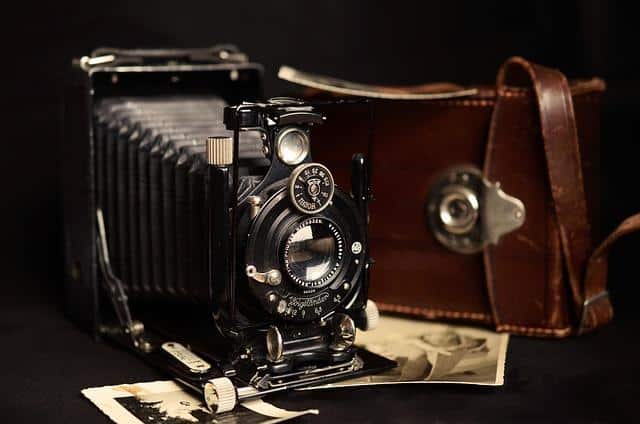
Crack open a dusty leather case, and you’re greeted by the quiet weight of a story: a vintage camera with fingerprints of lives it has already seen. The metal is cool, the shutter has a satisfying click, and the viewfinder frames the world a little softer than you remember. These cameras don’t just take pictures-they hold time, passing memories from one generation’s hands to the next.
In a world of instant filters and endless storage, shooting with an old film camera slows everything down. You compose with intention. You wait. You wonder what you caught until the negatives return, and that gap between pressing the shutter and seeing the result becomes part of the narrative. The imperfections-the light leaks, the grain, the slightly off focus-feel less like flaws and more like the texture of memory itself.
This article is for anyone who’s found a parent’s Pentax in the attic, picked up a thrifted point-and-shoot, or simply craves a deeper connection to their family’s archive. We’ll explore how vintage cameras help us tell stories across generations, why the process matters as much as the photos, and how to care for and share these analog treasures in a digital age. Ready to turn snapshots into heirlooms? Let’s lift the viewfinder together and see what stories are waiting.
Table of Contents
- Why slowing down with a mechanical camera helps families open up and tell deeper stories
- The best starter bodies and lenses for family storytelling Pentax K1000 Nikon FM2 Olympus OM1 with a 50mm for portraits and a 35mm for gatherings
- Film stocks and exposure tips that flatter skin and home interiors Portra 400 for mixed light HP5 Plus for timeless black and white meter for the shadows
- Preserve and share your analog archive the right way acid free sleeves gentle cleaning high resolution scans backups and meaningful captions for context
- Insights and Conclusions
Why slowing down with a mechanical camera helps families open up and tell deeper stories
When a session begins with a metal body in hand, a winding lever, and a measured click-whirr, everyone exhales. The pace shifts from performing for a lens to simply being together. The rituals-metering the light, focusing by hand, waiting for the right breath-create gentle pauses where memories surface on their own. Kids lean in to listen; grandparents trace the camera’s dials with familiarity; parents soften as they realize there’s no rush. In those pockets of quiet, stories step forward: the recipe card with grease stains, the lullaby sung in two languages, the sweater passed down. With fewer frames to burn, intention climbs, and the room fills with presence instead of pressure.
- Time invites trust: The deliberate rhythm gives shy voices room to appear.
- Tactile moments spark talk: Loading film and winding the lever gets hands busy, which gets hearts open.
- Scarcity sharpens focus: Limited shots encourage authentic gestures over staged smiles.
- Sound becomes ceremony: The audible shutter marks memories like a bell, making them feel witnessed.
- Nostalgia bridges generations: A vintage tool turns into a shared heirloom, connecting past and present.
Rather than directing with quick-fire prompts, I offer small invitations: choose the room where you always gather, pass an object that matters, wind the next frame together. The camera becomes a conversation piece, a reason to pause and remember specifics-the day the crib was built, the garden that fed a summer, the nickname only one person used. That slower pace lets me watch for the micro-stories: a thumb rubbed over a ring, a glance that says more than words, the burst of laughter after a long silence. In the end, the portraits feel like chapters written by everyone in the room-honest, layered, and lasting.
The best starter bodies and lenses for family storytelling Pentax K1000 Nikon FM2 Olympus OM1 with a 50mm for portraits and a 35mm for gatherings
For a first film kit that feels natural in busy, love-filled rooms, three classics rarely miss: the Pentax K1000, Nikon FM2, and Olympus OM‑1. Each keeps you in the moment with clear dials, big viewfinders, and dependable mechanics-so your attention stays on laughter in the kitchen, not on menus. Think of them as personality matches: the K1000 as the honest teacher that makes exposure click, the FM2 as the athlete with speed to spare, and the OM‑1 as the featherweight poet that never gets in the way. Load a 400‑speed film, let the light guide you, and trust your feet-these bodies love to be moved closer, backed up, and spun around a scene.
- Pentax K1000: Simple, sturdy, and wonderfully tactile; the meter is straightforward, and it’s a brilliant platform for learning exposure without fuss.
- Nikon FM2: Mechanical shutter reliability with speeds up to 1/4000s; great for sun‑splashed playgrounds and bright backyards where you still want shallow depth.
- Olympus OM‑1: Compact and quiet with silky controls; perfect when you want to be invisible during bedtime stories or morning pancakes.
Pair each body with a fast 50mm for intimate portraits and a nimble 35mm for group energy. The 50mm flatters faces, isolates little gestures, and thrives near windows at f/2-f/2.8. The 35mm keeps cousins, pets, and parents in frame without stepping back into the hallway; stop to f/4-f/5.6 for layered storytelling across a living room. Pre‑focus, breathe, and wait for the moment a hand reaches for cake-manual focus rewards anticipation.
- Pentax K mount: SMC Pentax‑M 50mm f/1.7 for creamy family portraits; SMC Pentax‑A 35mm f/2.8 for gatherings and kitchen-table scenes.
- Nikon F mount: Nikkor 50mm f/1.8 (AI‑S or Series E) for sharp, friendly rendering; Nikkor 35mm f/2 (AI‑S) for lively group storytelling.
- Olympus OM mount: Zuiko 50mm f/1.8 for pocketable portrait magic; Zuiko 35mm f/2.8 for cozy, clutter‑beautiful family frames.
Film stocks and exposure tips that flatter skin and home interiors Portra 400 for mixed light HP5 Plus for timeless black and white meter for the shadows
When your scene blends window light with warm table lamps, Portra 400 renders skin with creamy highlights and gentle color that flatters every generation gathered on the sofa. Its forgiving latitude loves a touch of extra exposure-rate it at ISO 200-320 and meter for the shadows so cheekbones and eye sockets hold detail. Let a window be your key and a lampshade your practical; wood grains, houseplants, and painted walls will keep their true warmth without going muddy. Negative film rewards intention: expose for faces, compose for calm backgrounds, and let the film’s soft shoulder tame bright lamps and specular kitchen tiles.
- Rate Portra 400 slower (ISO 200-320) for smoother skin; place your meter in the subject’s shadow side and expose there.
- Open up to f/2-f/4 for that living‑room glow; keep shutter at 1/60s+ to dodge motion blur from little feet.
- Tame mixed light by diffusing windows with a curtain and turning lamps slightly away from faces; Portra will knit it together.
- Embrace bounce: seat your subject near a pale wall or use a white bedsheet to lift under‑chin shadows gently.
For monochrome memories, Ilford HP5 Plus brings a timeless grain that adores textured interiors-linen curtains, old rugs, the curve of a grandparent’s hand. Keep it at ISO 400 for classic tonality, or push to 800-1600 when the sun dips; either way, meter for the shadows to anchor honest detail where it matters. A slight overexposure gives luminous midtones and supple skin; pushing adds grit that makes evening stories feel cinematic. Use window light as a soft key, add a nearby wall for fill, and let the black‑and‑white palette stitch together decades of family life without the distraction of color.
Preserve and share your analog archive the right way acid free sleeves gentle cleaning high resolution scans backups and meaningful captions for context
Your negatives, slides, and prints are tiny time machines-treat them like heirlooms. Slip each piece into acid‑free, lignin‑free enclosures (no PVC), keep them cool, dry, and dark, and handle edges only with clean cotton or nitrile gloves. Clean lightly before storage: nudging dust with a soft anti‑static brush or bulb blower, then spot-treat smudges with a microfiber cloth and, when appropriate, a film-safe solution. Think “least intervention first”-the goal is to stabilize, not polish. A well-labeled archival box, a silica gel packet, and a clear folder structure will save future you countless hours.
- Archival housings: acid‑free sleeves or envelopes; avoid sticky albums and magnetic pages.
- Environment: 30-40% RH, cool temperatures, away from light and fluctuating heat.
- Gentle cleaning: blower → brush → microfiber; test any solution on leader or a scrap first.
- Labeling: pencil on sleeves or archival pen on edge of contact sheets-never on the emulsion.
Digitize with intention so the stories can travel. Aim for high‑resolution scans (e.g., 3200-4000 dpi for 35mm; 600-1200 dpi for prints), capture in 16‑bit TIFF for a master file, and export JPEGs for sharing. Keep edits non‑destructive, profile your scanner, and include a ruler or color target when accuracy matters. Protect your work with a 3‑2‑1 backup strategy and name files so they’re findable. Finally, write meaningful captions-names, dates, places, who took the photo, and why it mattered-embedding details in IPTC fields so context travels with the image.
- Master + access files: TIFF/DNG for archiving; JPEG/WebP for family albums and posts.
- Backups: 3 copies, 2 different media, 1 off‑site (cloud or a relative’s drive).
- File naming: YYYYMMDD_Location_Subject_FrameNumber; keep a simple, consistent scheme.
- Captions that matter: “Aunt Rosa, Veracruz market, 1978-first day with the new rangefinder.” Add keywords and alt text for future searches.
Insights and Conclusions
If there’s a quiet magic to vintage cameras, it’s this: they ask us to slow down long enough to notice each other. A dented body, a soft shutter, the patient wait for a print-somehow, all of it turns moments into stories we can hold.
Before you close this tab, consider one small step. Ask a parent or grandparent about the first camera they used. Crack open that shoebox of photos and jot down names and dates on the backs. Load a roll into a thrifted point-and-shoot and make a portrait of someone you love. These aren’t just pictures; they’re breadcrumbs for whoever comes next.
I’d love to hear your own camera memories-what you found in a drawer, who taught you to meter, the photo you still carry in your wallet. Share your story, and let’s keep this chain of lenses, hands, and hearts alive.
Here’s to the light, the grain, and the generations they connect. Until next time, happy shooting.
