
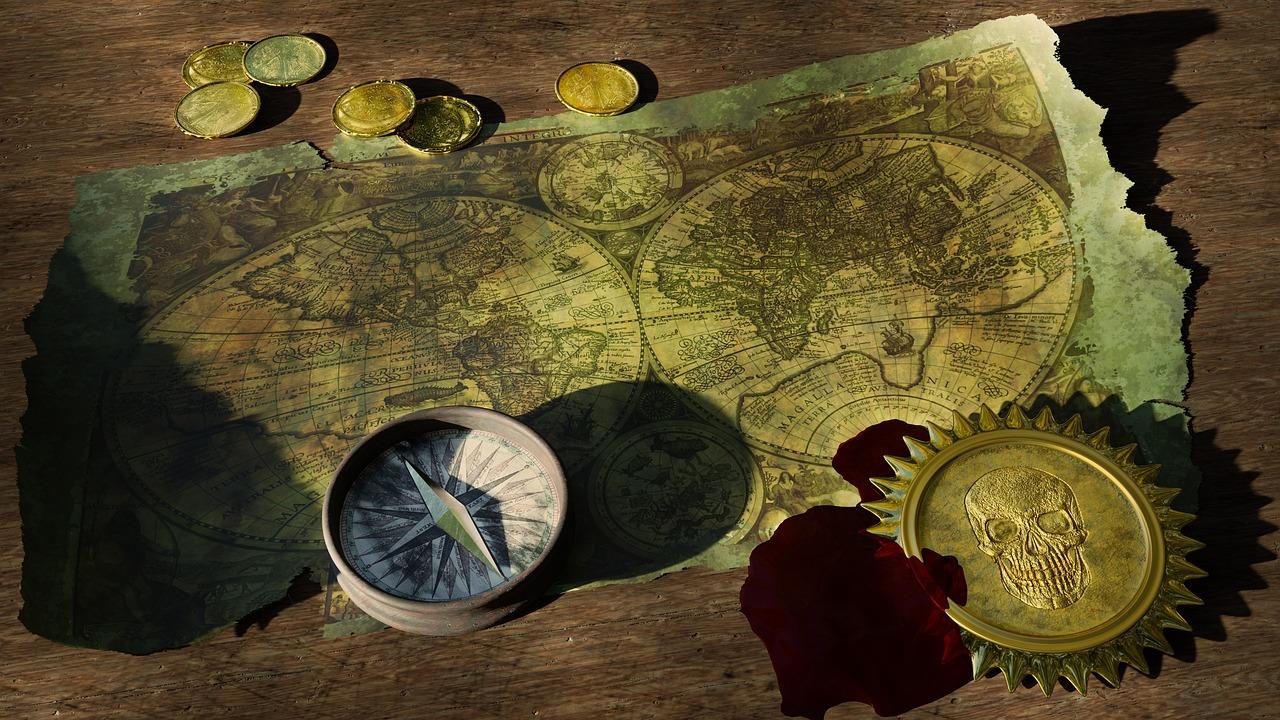
There’s a special kind of magic in an old map-the velvety paper, the sun-faded inks, the tiny sea monsters patrolling uncharted waters. If you’ve ever traced a finger along a jagged coastline and felt time slow down, you already know the pull. Antique maps and vintage globes are part art, part history, part daydream. They’re invitations to spin the world, to see how people once believed it looked, and to marvel at hand-colored borders, ornate cartouches, and the delightful quirks of past geography.
We love them because they tell stories-of explorers and errors, trade routes and ambitions, places renamed and borders redrawn. They make rooms feel warmer and wiser, turning walls into conversation starters. In a world of zoomable screens, a worn paper fold or a globe’s gentle wobble feels honest and human. You can sense the craft: copperplate engravings, brushstrokes of watercolor, the cartographer’s choices about what mattered enough to include.
In this article, we’ll unpack why these pieces keep calling to us: the beauty, the history, the nostalgia, and the way they effortlessly elevate a space. We’ll also share simple tips for spotting quality, caring for your finds, and starting a collection without needing an atlas-sized budget. Consider this your passport.
Table of Contents
- The charm of cartouches compass roses and sea monsters and what they reveal about history
- How to authenticate antique maps and vintage globes with simple at home checks and research
- Smart buying advice where to find trustworthy dealers what to pay and red flags to avoid
- Display and care tips to showcase your collection beautifully while preserving it for decades
- The Way Forward
The charm of cartouches compass roses and sea monsters and what they reveal about history
Those ornate cartouches are more than decoration; they’re miniature stages where printers, patrons, and places announce themselves with swagger. Flourishes of fruit, armor, and angels hint at taxes, trade, and theology. A cartouche swollen with crowns and coats of arms shouts imperial backing, while tools and instruments signal the pride of craftsmanship. The compass rose, exploding like a starburst, is both science and spectacle: petals for the winds, spokes for rhumb lines, a gilded brag about mastery of navigation and commerce. Along the edges, frothing beasts-whales, serpents, and horned oddities-blend myth with merchant gossip, marking peril, profit, and the limits of knowledge.
- Cartouches double as billboards of power-naming mapmakers, patrons, and political claims.
- Compass roses chart the tools and ideas of their day, from wind lore to magnetic awareness.
- Sea creatures encode hearsay, hazard, and resource, turning rumor into visual shorthand.
Read with a curious eye and these flourishes become footnotes to global history. Allegorical figures-Neptune, Mercury, Justice-telegraph ideology and ambition; color choices map rivalries and revenue; even line weight whispers about printing guilds and copperplate costs. For collectors and daydreamers alike, decoding these details turns a pretty sheet into a time machine and a globe into a conversation-about how people navigated risk, imagined the unknown, and stitched continents together.
- Hunt for hidden dates in Latin mottos or dedication phrasing to pin down political context.
- Spot trade emblems-anchors, bales, spices-to trace commerce and colonial reach.
- Compare hand-coloring to distinguish original washes from later “improvements.”
- Count rhumb lines and their hubs to infer navigational priorities and ports of power.
- Match creatures to latitudes: a narwhal up north or a crocodile near Africa reveals lore, misidentification, or resource mapping.
How to authenticate antique maps and vintage globes with simple at home checks and research
Before you reach for a wallet, reach for a magnifier, a soft light, and your senses. Authentic pieces carry time’s fingerprints: rag-based paper shows laid and chain lines when backlit, while modern reproductions often glow under a blacklight thanks to optical brighteners. Copperplate maps reveal a faint plate mark and slight emboss, and hand color sits unevenly at borders with the occasional brush overlap. On globes, look for gore seams that are slightly raised, varnish craquelure that isn’t uniform, and honest oxidation on brass meridians rather than sprayed-on “antique” patina. Trust your nose, too: aged shellac and old linen smell different from fresh ink and synthetic glue.
- Paper & printing: Under magnification, genuine intaglio lines taper and bite; modern prints show even halftone dots or inkjet pixellation.
- Watermarks: Hold maps to the light for papermaker marks; dates/logos can anchor the sheet’s era.
- Edges & folds: Period centerfolds sit where atlases were bound; wormholes and foxing scatter irregularly, not in tidy patterns.
- Globes: Check for hand-applied gores with slight misalignments at poles, aged shellac scent, and slot-head screws (Phillips often signals later repairs).
- Color: Early hand color bleeds lightly into fibers; modern tinting sits on top, flat and uniform.
Next, let history do the heavy lifting. Names and borders timestamp objects: a globe reading Persia (pre‑1935), East & West Germany (1949-1990), or Zaire (1971-1997) speaks to its moment; a map labeling Russian America predates the 1867 Alaska purchase. Cross-check cartouches, scales, and projections with reputable archives to confirm the state or edition, and read the fine print-imprints, privilege statements, and engraver credits are hard to fake well. Take provenance breadcrumbs seriously: old dealer labels, pencil shelf marks, and library stamps can be clues, not flaws.
- Geopolitical clues: Look for period toponyms like Ceylon/Sri Lanka, Leningrad/St. Petersburg, Ottoman Empire/Turkey to bracket dates.
- Compare online: Match your piece against the David Rumsey Collection, Library of Congress, British Library, or Old Maps Online to verify plates and lettering styles.
- Bibliography checks: Use Tooley, Burden, or Shirley for maps and Dekker for globes to confirm known issues and variants.
- Typography tells: Long “ſ” in older prints, inconsistent letterpress insets, and engraved vs. litho labels help sort centuries.
- Document everything: Photograph details, note dimensions, and record binding holes or repairs-consistency across these details supports authenticity.
Smart buying advice where to find trustworthy dealers what to pay and red flags to avoid
Start with sources that stand behind what they sell. Reputable antiquarian map and globe dealers publish complete descriptions (cartographer, date, state/edition, plate and sheet size, watermark, color as “contemporary” or “later,” and any restoration) and offer written guarantees. Look for membership in bodies like ILAB, ABAA, or national antiquarian associations, and shop vetted fairs such as the London Map Fair, Miami International Map Fair, and the New York Antiquarian Book Fair. Major auction houses with specialist departments (e.g., Swann, Christie’s, Sotheby’s) are solid hunting grounds-just read the condition report and factor in buyer’s premium. When budgeting, remember that price tracks scarcity, desirability, and condition: a common 19th‑century atlas leaf might run $150-$800, a decorative 17th‑century map can be $2,000-$20,000+, and globes range widely (student examples $200-$1,200, fine library globes $3,000-$30,000+). The best deals often come from informed patience rather than impulse.
- Where to look: Vetted dealers’ websites, established fairs, specialist auctions, museum shop deaccessions, and university sales with provenance.
- Ask for: High-res front/back images, raking light photos, watermark notes, and a dated, itemized invoice with a guarantee.
- Pricing cues: Rarity, cartographer (e.g., Blaeu, Hondius, Speed), decorative elements, original hand color, margins, and unrestored condition raise value.
Trust your eyes-and your questions. Red flags include vague dating (“circa 1600?”), no mention of state/edition, or euphemisms for damage. Beware “antiqued” modern prints, later coloring sold as “original,” margins trimmed to the plate line, or aggressive bleaching and re-sized paper. For globes, watch for modern hardware, over-glossed varnish, or crude re-goring. A trustworthy seller welcomes scrutiny and returns; a shaky one dodges details and pushes urgency. When something feels “too perfect” for the price, it usually is.
- Common red flags: Coffee-stain patina, uniform tan paper, inkjet dot patterns, anachronistic place names, or mismatched typefaces.
- Condition gotchas: Hidden backing on modern linen, inpainting that covers cartouche lines, closed tears at centerfold not disclosed, or margins shaved.
- Dealer behavior: No return policy, refusal to provide back/edge photos, or reluctance to state “later color” plainly.
- Quick checks: Request raking-light images, watermark notes, and a UV photo; compare with a known reference image from libraries or dealer catalogs.
Display and care tips to showcase your collection beautifully while preserving it for decades
Create a stage that flatters your cartographic stars while keeping conservation front and center. Think of frames as micro-climates: choose UV-filtering glazing, acid-free, lignin-free mats, and spacers so paper never kisses the glass. For globes, elevate them-literally. A steady pedestal at eye level turns them into sculpture, while indirect lighting lets seas and cartouches glow without fade risk. Keep the palette calm and let the detailing sing; a neutral wall and a few well-chosen risers do more than a crowded shelf ever could.
- Frame for the future: Museum glass or UV acrylic, archival backing, and reversible Japanese-tissue hinges for maps.
- Mind the light: Indirect, UV-managed illumination; warm LEDs (2700-3000K) aimed off-axis; add window film or shades where needed.
- Let paper breathe: Use spacers; skip pressure-mounts and tapes that can stain or cockle.
- Stage globes with presence: Solid, felted bases and cradle-style supports for fragile meridians-never balance by the axis.
- Compose with rhythm: Group by era, maker, or color; vary heights; keep backgrounds simple so the engraving takes the spotlight.
- Rotate on purpose: Display for 3-6 months, then rest in the dark to preserve color and paper strength.
A few quiet habits add decades to delicate paper and varnished gores. Treat every piece as if a conservator will see it tomorrow: clean, dry hands (or nitrile gloves), slow movements, and stable environments. Dust, don’t polish; support, don’t flex. And document-because a tidy record helps you plan safe rotations and protects the story your collection tells.
- Handle like a pro: Clean hands or nitrile gloves; support maps with two hands or a board; lift globes by the base, not the axis.
- Control the climate: Aim for 40-55% RH and steady, moderate temps; keep pieces away from vents, radiators, and fireplaces.
- Dust, never wet clean: Use a soft goat-hair brush or microfiber cloth; avoid water, cleaners, and oils.
- Archive smart: Flat storage in archival folders/boxes; interleave with acid-free tissue (buffered for most rag papers; unbuffered for delicate color media).
- Reversible mounts only: Archival corners or Japanese tissue with wheat-starch paste-no pressure-sensitive tapes.
- Stability and safety: Discreet quake putty on stands; anti-tip hardware for tall bases; level surfaces to prevent drift.
- Log and digitize: Condition notes, provenance, and high-res scans aid insurance and guide display rotations.
- Pest and off-gassing control: Inspect regularly; avoid storage against raw wood or acidic cardboard; keep spaces clean and dust-light.
The Way Forward
In the end, our love for antique maps and vintage globes isn’t really about paper, ink, or patina-it’s about the feeling they spark. They’re quiet time machines, spinning us back to eras of bold guesses and hand-drawn coastlines, reminding us that curiosity is a timeless human habit. Every crease, cartouche, and latitude line is a breadcrumb from someone else’s journey that nudges us to start our own.
Whether you’re a seasoned collector or you just rescued your first schoolroom globe from a flea market, there’s joy in living with these objects. Hang a well-traveled map above your desk, keep a globe where little hands can spin it, or gift one to a friend who’s always planning their next trip. They turn rooms into stories and questions into adventures.
We’d love to hear yours: Which map do you treasure, and what corner of the world do you spin to first? Share in the comments and keep exploring-with a compass in your heart and a bit of history at your fingertips. Here’s to getting lost, and finding ourselves, in the lines and latitudes of the past.
