
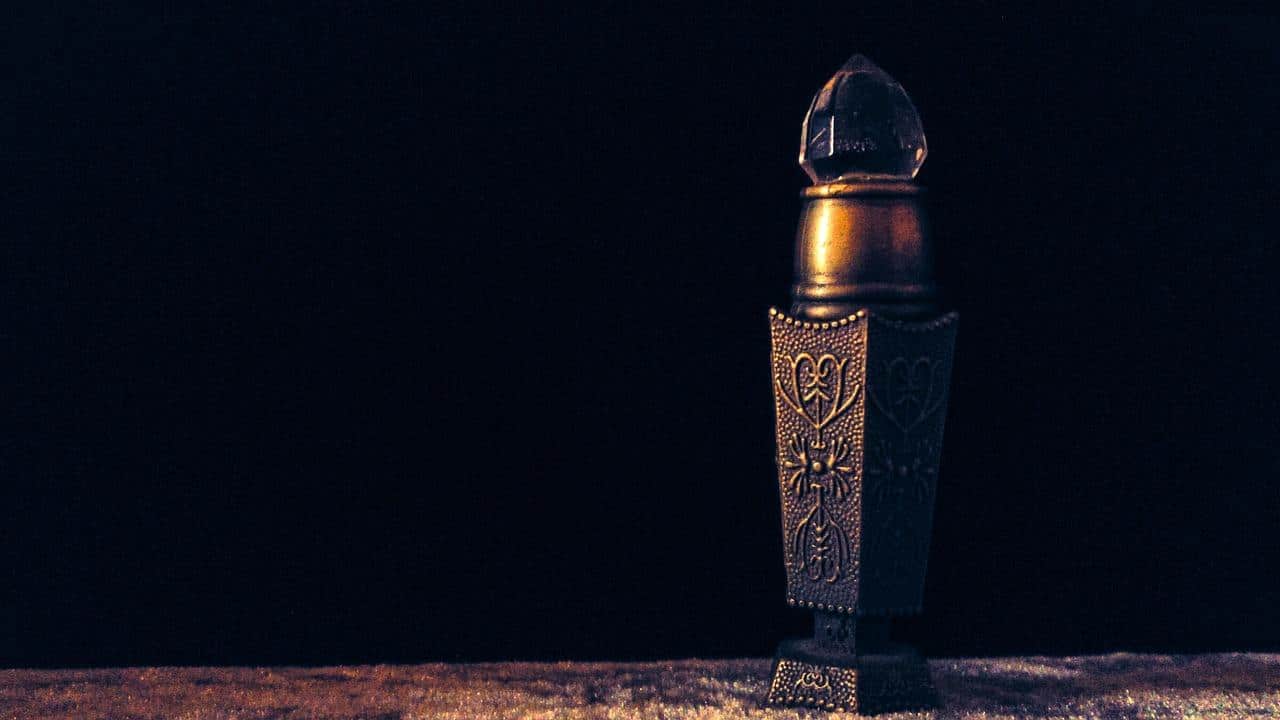
Before a single spritz meets your skin, the bottle has already told a story. Vintage perfume bottles are tiny time capsules-part sculpture, part brand manifesto, and part love letter to the eras that made them. From hand-cut crystal stoppers and tasselled atomizers to sleek Art Deco silhouettes and Space Age plastics, these vessels did far more than hold fragrance; they shaped how we imagined it.
In this article, we’ll wander through vanities and ateliers to uncover how design houses and glassmakers-think Lalique, Baccarat, and the grand parfumeurs-turned scent into something you could see and hold. We’ll look at why a flacon’s curve or cap can whisper luxury, rebellion, or romance, and how those choices reflect the culture of their time: the glamour of the 1920s, the optimism of mid-century modern, the excess of the ’80s, the minimalism of the ’90s.
We’ll also peek inside the juice itself. Fragrance design is its own art form, built on top, heart, and base notes, shaped by materials that have evolved with taste, technology, and regulation. Along the way, we’ll talk about why collectors chase vintage formulas, how reformulations changed icons, and what to look for if you’re hunting for a bottle with history.
Think of this as a guided spritz through the past: a friendly tour of the moments, makers, and masterpieces that made perfume a feast for the eyes as much as the nose.
Table of Contents
- From Lalique to Baccarat The design icons that shaped vintage perfume bottles and why they still matter
- Reading the bottle Decoding stoppers labels glass marks batch codes and dating clues you can spot at home
- Collect like a pro Where to buy how to authenticate and what to pay by era and condition
- Care and display Preservation tips ideal storage gentle cleaning methods and ways to keep the scent alive
- The Conclusion
From Lalique to Baccarat The design icons that shaped vintage perfume bottles and why they still matter
When glass met imagination, legends were poured: Lalique carved dreams into frosted reliefs and opalescent halos for Coty, turning women into nymphs and botanicals into shimmering arabesques; Baccarat gave fragrance gravitas with flawless crystal, faceted stoppers, and that unmistakable weight that feels like ceremony in the hand. Together they taught the world that a bottle could be more than a vessel-it could be architecture for scent, a miniature sculpture that framed light, softened edges, and invited fingertips to linger. From Art Nouveau vines to Art Deco geometry, their collaborations with perfumers made the ritual of uncapping, dabbing, and displaying feel like a private performance.
- Lalique: satin-finished reliefs, opalescent glass, nature motifs that blur shadow and glow.
- Baccarat: prismatic clarity, precise cuts, magnetic heft; think regal urns and jewel-like stoppers.
- Design kin: Julien Viard’s sculpted necks, St. Louis’s crisp symmetry, Lucien Gaillard’s botanical modernism.
They still matter because their ideas keep shaping today’s shelves: refillable silhouettes that honor longevity, sculptural forms that photograph beautifully, and tactile details-thick bases, cold collars, click-fit closures-that make luxury feel human and memorable. Collectors chase provenance and craftsmanship; brands mine the archive for story-rich silhouettes that telegraph authenticity; and designers borrow the playbook-contrast matte with gloss, exaggerate proportion, celebrate negative space-to make modern bottles that feel timeless. In a world of digital everything, these icons remind us that perfume is also about light, weight, and touch-the poetry of glass that lets a fragrance be seen before it’s ever smelled.
Reading the bottle Decoding stoppers labels glass marks batch codes and dating clues you can spot at home
Your bottle is a tiny archive of design choices and production tells. Start with the closure and face it presents to the world: the stopper reveals craftsmanship (and sometimes era) through the way it fits, seals, and wears, while the label whispers about printing technologies, typography trends, and regulatory language. A quick, gentle inspection-no force-can uncover whether you’re holding a hand-finished treasure or a later, mass-molded icon, and whether the juice inside has been exposed to air or light over time.
- Stopper fit: A smooth “glide” and soft resistance often hints at ground glass; a crisp “click” suggests modern gaskets or liners. Look for a dauber-long and glassy is older; short or plastic is usually newer.
- Materials & wear: Cork or thread-wrapped necks feel earlier; nylon sleeves and silicone rings skew contemporary. Verdigris on metal collars, compressed cork, or evaporative tide lines can signal age.
- Label cues: Raised gold leaf, litho textures, or uneven inking lean vintage; laser-sharp microtype and QR-like glyphs indicate recent production. Check language: “Parfum” only vs. bilingual/tri-lingual copy can hint at decade and market.
- Adhesives: Browned, brittle glue and slight label shrinkage are common in older bottles; clean, elastic adhesive with perfect alignment feels later.
Flip the bottle for the maker’s breadcrumbs. Base and shoulder glass marks tell you how it was born-hand finished or fully automated-while batch codes and regulatory symbols chart its journey through time. Read for seams, etching, and country marks, then cross-check what you see on the bottle against its box (if you have it). Small mismatches can be innocent; big contradictions are red flags.
- Glass anatomy: A polished or snapped pontil and soft, wandering seams suggest hand work; razor-straight seams climbing through the lip denote machine molding. Acid-etched maker marks or “France/Italy/W. Germany” can anchor a time window.
- Regulatory tells: The “℮” estimate mark (common in Europe post‑1970s), flammability icons, and barcodes (late 1970s onward) help bracket eras. “Made in W. Germany” = 1949-1990; dual ml/fl. oz. is typical for export lines.
- Batch codes: Look under the base, on the back, or crimp collar for a short alphanumeric string. Same code on bottle and box is a good sign. Fonts deeply stamped or acid-etched feel older than inkjet or laser pad prints.
- Patina & fill: Slight color shift, micro-sediment, or a lowered fill line (“angel’s share”) can indicate age and storage conditions; crystal-clear liquid and full fill may signal a later reissue or excellent storage.
Collect like a pro Where to buy how to authenticate and what to pay by era and condition
Cast a wide net and buy with your eyes-and the metadata. Ask sellers for sharp photos of the base, stopper, label, and box; request close-ups of signatures and any embossing. Factor in buyer’s premiums and hazmat/ground shipping before you bid. For atomizers, ask that the bulb be detached and bagged to prevent leaks. Provenance (receipts, old shop labels, catalog clippings) is golden, and a seller who volunteers it is worth your trust-and often the premium.
- Estate sales & house clearances: Go early; ask about vanities, linen closets, and dressers that haven’t been staged.
- Auction platforms (eBay, LiveAuctioneers, Invaluable): Set saved searches by house and model; read past results; budget in fees.
- Antique fairs & bottle shows: Best place to handle glass and check stoppers; build relationships with specialist dealers.
- Specialist perfume dealers & galleries: Curated and authenticated stock, typically higher but safer.
- Collector groups (forums, Facebook, Instagram): Peer-to-peer sales, references, and ISO posts; ask for timestamped photos.
- Etsy & small online shops: Boutique finds; read return and breakage policies closely.
Authenticate like a conservator and price like an appraiser. Look for period-correct construction, maker marks, and honest wear. A tight, original fit between stopper and neck beats a shiny “too-new” replacement every time. For labels, trust typography, paper aging, and glue halos more than tea-stained fakes. As for value, think equation: era × design prestige × glassmaker × completeness × condition. Sealed extraits and signed art glass can command multiples; heavy evaporation, replaced atomizer bulbs, or flaking labels push prices down.
- Quick authenticity checks:
- Signatures: “R. LALIQUE” (pre-1945) vs “LALIQUE FRANCE” (postwar); acid-etched “BACCARAT FRANCE”; house marks and lot codes on bases.
- Construction: Ground/polished pontil, crisp mold lines, matching numbers on stopper and neck, correct height/cap for the edition.
- Labels & print: Period fonts, foxing and edge wear, no modern optical brighteners under UV; gold enamel should show micro-crazing with age.
- Juice & hardware: Natural ullage (evaporation) is normal; intact cord/wax seals (baudruchage) add value; atomizer bulbs should be pliable but not “newly replaced.”
- Provenance: Catalog pages, old price stickers, receipts, retailer stamps-keep these with the bottle.
- What to pay (typical ranges, market-dependent):
- Art Nouveau/Deco signed glass (Lalique, Baccarat): Empty/presentation $400-$2,500+; with sealed extrait $1,200-$8,000+ for iconic designs.
- 1930s-50s extraits (Chanel, Guerlain, Caron, Worth): Opened 7-30 ml $120-$450; sealed/NOS $300-$1,500 depending on box and formula.
- 1960s-80s sprays/splashes: Common editions $40-$180; rarities/limiteds $200-$600.
- Minis & travel sets: $10-$60 each; complete gift sets $120-$400.
- Condition multipliers: Full set with box/papers = 1.3-1.8×; signed art glass = 2-10×; heavy evaporation/replaced parts = −20-70%.
Care and display Preservation tips ideal storage gentle cleaning methods and ways to keep the scent alive
Your bottles can look like jewels and still be protected when you treat them with museum habits at home. Think steady environments, soft light, and supports that don’t stress fragile glass or labels. A few small tweaks keep evaporation and discoloration at bay while letting your collection shine on the shelf.
- Cool and constant: Aim for 59-68°F (15-20°C) with minimal swings; avoid radiators, sunny sills, and bathrooms.
- Hide from light: Store in original boxes, drawers, or behind UV-filter glass; display briefly and rotate pieces.
- Stand upright: Keep caps tight, bottles vertical, and avoid shaking to limit oxygen mixing and leaks.
- Smart display: Use acrylic risers, low-heat LED lighting, and a little museum gel/putty to anchor bases discreetly.
- Climate helpers: Add silica gel packets nearby (not touching labels) to tame humidity; avoid reactive metal shelving.
- Gentle handling: Clean, dry hands or cotton gloves; hold by the base, not the neck or bulb.
When it comes to cleaning and keeping the fragrance vibrant, think minimal and mindful. You’re preserving both the artwork and the aromatic story inside-so choose materials that respect vintage finishes and fragile atomizers while reducing air exposure that dulls the blend over time.
- Dust, don’t scrub: Use a soft microfiber cloth or clean makeup brush; avoid paper towels and abrasives.
- Spot-clean glass only: For sticky residue, a barely damp swab with mild, pH-neutral soap; for plain glass, a touch of isopropyl on a swab-keep clear of labels, paint, and gilt.
- Metal trims: Polish gently with a jeweler’s cloth; skip liquid dips that can wick under caps or lift plating.
- Bulb atomizers: If possible, store bulbs detached and the valve capped to slow evaporation; don’t compress brittle rubber.
- Limit oxygen: Decant a small “daily wear” portion into a tight atomizer and leave the mother bottle sealed; consider an inert gas spritz (argon) to blanket the headspace.
- Cool, dark storage: A fridge-safe, opaque box works if condensation is controlled-bag the bottle airtight and avoid freezing.
- Mind the threads: Worn closures can benefit from a tiny wrap of PTFE (plumber’s) tape for a better seal-never overtighten.
- Track changes: Date photos and note fill levels and color shifts so you can intervene early.
The Conclusion
And that’s the magic of it, isn’t it? Every vintage bottle is a tiny time capsule-cut crystal and curved glass holding whole eras of taste, technology, and desire. The juice and the design were never strangers; they were dance partners, telling the same story in scent and silhouette.
Next time you spot a dusty atomizer at a flea market or catch a glint of old glass on a family vanity, pause. Hold it to the light. Notice the weight, the stopper, the typography. Imagine the hands that sketched it, the “nose” who composed it, the dresser it once lived on. Whether you collect, wear, or simply admire, these pieces invite us to slow down and smell the history.
I’d love to hear your story: Do you have a favorite vintage bottle or a scent that unlocks a memory? Drop it in the comments. If this journey made your inner collector perk up, stick around-soon I’ll share how to spot authentic pieces, care for old formulas, and display them safely without dimming their sparkle.
Until then, may your shelf shine and your sillage tell beautiful stories.
