
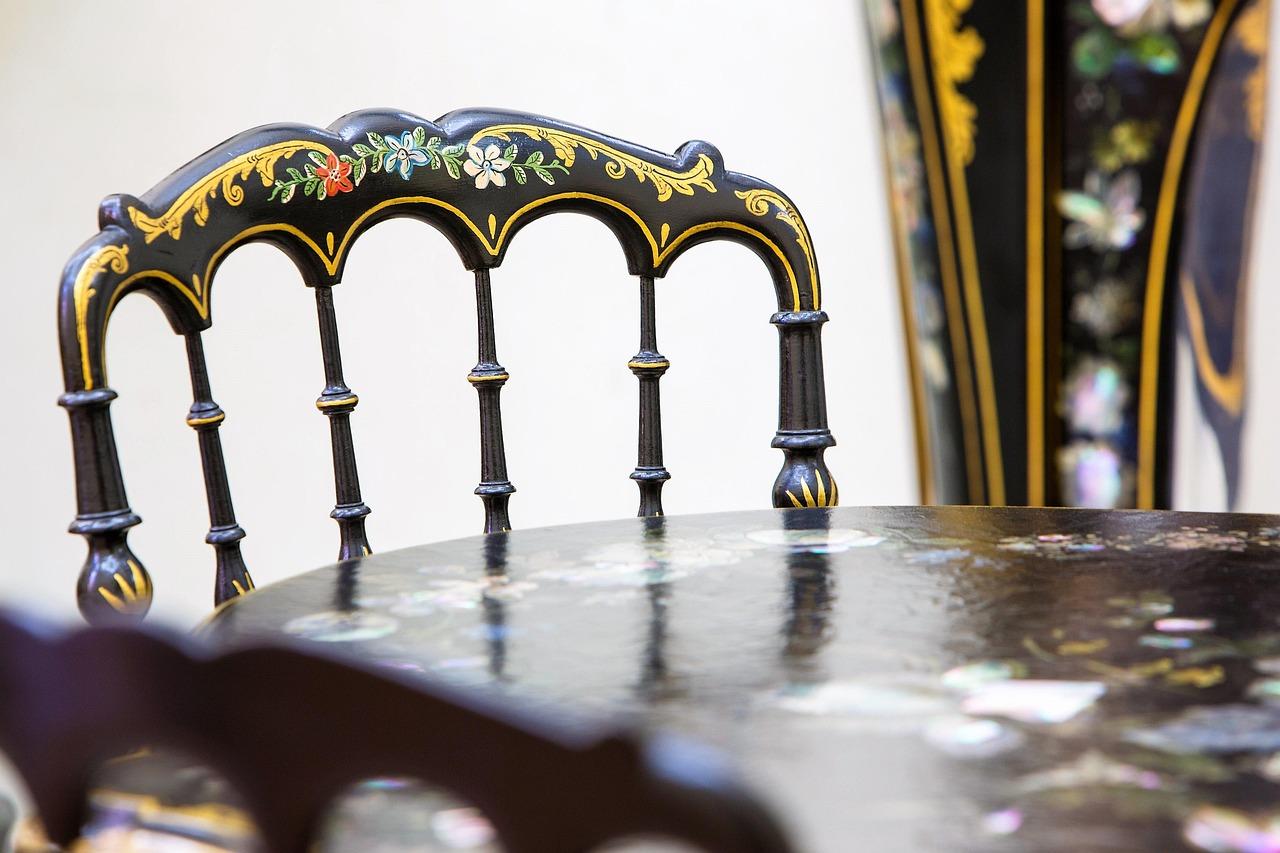
If you’ve ever run your hand along the edge of a centuries-old table and felt the tiny waves left by a hand plane, you already know: antique furniture is more than décor. It’s a record of human skill. Every dovetail, saw mark, and rubbed patina tells a story about the tools, materials, and minds that shaped it-long before mass production and MDF turned furniture into flat-packed commodities.
In this article, we’ll peek beneath the polish to see how antique pieces reveal the methods and mindset of past makers. We’ll talk joinery that still holds strong without a single screw, wood choices guided by local forests, finishes mixed in small workshops, and the subtle quirks of regional styles. You’ll learn what to look for-those telltale details that distinguish a machine-cut imitation from a cabinetmaker’s lifetime of practice.
Whether you collect, refinish, or just love a good backstory, this is your invitation to read furniture like a time capsule-and to appreciate the quiet brilliance in every plane stroke and peg.
Table of Contents
- Reading joinery like a pro from hand cut dovetails to mortise and tenon clues
- Wood and hardware tell all identify oak versus walnut and wrought nails versus machine screws
- Finish and patina essentials test with alcohol to spot shellac and skip harsh cleaners
- Smart stewardship buy authentic pieces plan reversible repairs and set a gentle care routine
- In Retrospect
Reading joinery like a pro from hand cut dovetails to mortise and tenon clues
Start with the drawers and case corners-the small clues add up fast. Hand-worked dovetails often show a human rhythm: tails and pins that vary in width, faint scribe lines, and tiny gaps burnished dark over time. Machine-era joints, by contrast, look eerily regular. Study end grain and inside corners for tool history: a chisel’s exit bruise, a saw’s wandering kerf, or the slight hollow left by a plane. These aren’t flaws; they’re the signature of a workshop that measured with gauges and cut by feel rather than templates.
- Knife lines: Faint, straight score marks at baselines signal layout by hand.
- Uneven spacing: Tails and pins that aren’t clones suggest a pre-jig age; very skinny pins can indicate later 18th-19th c. finesse.
- Sharp interior corners: Hand-cut pins meet the baseline crisply; machine-cut dovetails often show rounded inside corners from router bits.
- Saw marks: Vertical or slightly wandering kerfs point to hand sawing; perfect, parallel milling marks hint at industrial processes.
- Oxidation and wear: Darkened glue lines from hot hide glue and polished edges where fingers pulled drawers for decades are authentic timekeepers.
Frame rails, chair joints, and door stiles reveal the deeper story. Traditional mortise-and-tenon construction favors strength and serviceability, often locked with pegs and wedges. Look for evidence of layout and assembly technique-the sort of choices a craftsperson makes when wood movement matters more than speed. Shoulder lines that read like knife walls, pegs that were driven on a draw, and haunches at the ends of rails are all quiet, telling details.
- Drawbored pegs: Peg holes that are slightly off-center in the tenon (and often a touch oval from shrinkage) show a mechanical lock, not just glue.
- Wedged tenons: Through-tenons with flared ends or visible wedges indicate a secure, hand-fitted joint; wedge slots should run across the grain.
- Haunched rails: Small notches at the top of door or frame rails prevent twist-common in quality 18th-19th c. work.
- Tusk or key tenons: Knockdown construction on trestles and beds features removable keys; wear patterns around the key seat suggest long service.
- Tool-signed shoulders: Crisp arrises and slight plane facets on cheeks beat sanded, radiused machine joints every time.
Wood and hardware tell all identify oak versus walnut and wrought nails versus machine screws
Run your fingertips across a drawer side and the story of the timber starts to speak. Oak wears broad, open pores and showy medullary rays; on quartered boards you’ll see shimmering ray-fleck “tiger stripes.” It leans amber to straw, with black halos where iron met its tannins. Walnut settles into chocolate and plum-brown hues, often with pale sapwood edges; its pores are finer, the figure silky, the patina mellow rather than brassy. Peek at the end grain: red oak’s vessels drink like tiny straws, while white oak’s are plugged, and walnut’s appear smaller and more evenly spaced. Smell and light tell tales too-oak’s tannic tang and lively reflectivity versus walnut’s warm, low-gloss glow that deepens in corners time forgot.
- Color cue: Oak = honey/amber; Walnut = cocoa-to-plum, with creamy sapwood.
- Grain cue: Oak’s bold rays and open pores vs. Walnut’s smoother, tighter figure.
- Patina cue: Iron stains go inky on oak; walnut shifts to a soft, nut-brown luster.
- End-grain cue: Pronounced straw-like pores in oak; finer, more uniform pores in walnut.
- Pro tip: Quartersawn oak flashes ray-fleck; walnut favors flowing cathedral arches.
Hardware, too, is a timestamp. Early wrought nails were hand-forged: irregular rose heads, tapered rectangular shanks, and fibrous, blackened surfaces. Later cut nails are more uniform but still rectangular in section, while modern wire nails are round and consistent. Screws reveal even more: pre-industrial, hand-filed wood screws have off-center slots, slightly domed, irregular heads, and a blunt, tapered shank; fully machine screws arrive with dead-even threads, symmetrical heads, and, by the 20th century, pointed tips and standardized drives (Phillips appears in the 1930s). Patina matters-age softens edges and burnishes slots; fresh steel shines and bites too cleanly.
- Nail profile: Wrought = hammered, wonky head and tapered shank; Cut = rectangular shank with shear marks; Wire = round, uniform.
- Screw slot: Hand-cut = off-center, shallow; Machine = centered, crisp. Phillips is a modern tell.
- Thread and tip: Early screws show uneven threads and blunt ends; later ones are uniform and pointed.
- Wear story: Dark, softened metal with wood staining suggests age; bright metal and sharp edges hint at replacements.
- Joinery harmony: Old nails and hand-cut screws often accompany tool marks and irregular mortises-mismatches flag later repairs.
Finish and patina essentials test with alcohol to spot shellac and skip harsh cleaners
Before you reach for polish, learn what you’re working with. A quick, gentle spot-test can reveal the original finish without disturbing the lovely, time-earned patina. Moisten a cotton swab with a touch of denatured alcohol, touch a hidden area (like the back of a foot or inside an apron), and watch closely. If it goes tacky or color lifts, you’re likely dealing with shellac-common on older pieces and often French-polished. No reaction usually points to varnish or polyurethane. Work slowly, don’t rub, and think like a conservator: the goal is information, not shine.
- Prep lightly: Dust first with a soft brush to avoid grinding grit into the surface.
- Test in secret: Choose an inconspicuous spot; apply a dab, wait 10-20 seconds, and observe.
- Read the result: Tacky/transfer = shellac; no change = likely varnish/poly; slight haze may be wax or grime.
- Stop at clues, not damage: One tiny test is enough-don’t flood or scrub.
To keep that mellow glow, skip harsh cleaners like ammonia, bleach, strong citrus, or silicone-laden sprays-they can streak, embrittle, or leave residue that fights future repairs. Instead, favor minimal, reversible care: dust, lift grime gently, and re-wax sparingly to protect without smothering the wood’s story. Mind the environment, too-stable humidity and filtered light do more for longevity than any bottle on a shelf.
- Safe clean: Lightly damp microfiber with distilled water plus a drop of pH‑neutral soap; follow with a dry cloth.
- Wax wisdom: Remove old wax with odorless mineral spirits; apply a thin coat of paste wax (beeswax/carnauba), then buff.
- No-nos: Avoid steam, magic erasers, petroleum polishes with silicone, and colored waxes that can stain pores.
- Preservation boosts: Use felt pads, rotate sun exposure, and keep RH around 40-55% to prevent checks and crazing.
Smart stewardship buy authentic pieces plan reversible repairs and set a gentle care routine
Choose with intent and let the clues of age guide you. The best pieces wear their years in honest ways: tool marks that aren’t perfectly uniform, softened edges touched by generations, and a patina that pools in carvings rather than sitting flat and shiny. Favor dealers who welcome questions, and train your eye to spot craftsmanship-hand-cut dovetails, pegged mortise-and-tenon joints, and secondary woods inside drawers all whisper of time-tested methods. Ask for provenance, compare hardware to period references, and remember that integrity beats perfection; a thoughtfully aged finish or an old, well-executed repair is often a sign of a life well-lived, not a flaw to fear.
- Read the joinery: slight irregularities suggest handwork; machine precision can hint at later reproductions.
- Seek layered patina: oxidation in recesses, gentle wear at contact points, and color depth that isn’t uniform.
- Check hardware “ghosts”: subtle outlines or holes can reveal swapped pulls; original fittings add character and value.
- Verify materials: era-appropriate woods and saw marks, plus secondary woods inside, support authenticity.
- Document the story: receipts, labels, or family history bolster provenance-keep copies with the piece.
Repair lightly and reversibly so future caretakers can undo what’s been done. Choose conservation-friendly glues like hot hide or fish glue over epoxies, and stabilize rather than remake; loose joints can often be tightened without stripping a finish that has taken a century to mellow. Adopt a gentle care routine: dust with a soft brush, clean sparingly with a barely damp cloth and pH-neutral solution when needed, and nourish the surface with microcrystalline or beeswax-not silicone sprays. Protect from harsh light and swings in humidity, use coasters and breathable pads, and lift furniture rather than dragging it. A small cadence of care-quiet, consistent, reversible-lets the craftsmanship speak while you simply keep time.
- Start with “do no harm”: test any cleaner on an inconspicuous spot; prefer dry methods first.
- Use reversible adhesives: hide glue for joints and lifting veneer; avoid permanent epoxies.
- Mind the climate: aim for 40-55% relative humidity and steady temperatures to reduce movement and cracks.
- Shield from UV: rotate placement, use curtains or UV film, and avoid direct sunshine on veneered tops.
- Protect contact points: felt pads under feet, coasters under glasses, and breathable table pads for dining surfaces.
- Polish with purpose: a thin coat of microcrystalline/beeswax once or twice a year; avoid silicone and heavy oils.
- Keep a care log: note dates of cleanings and repairs, and store any removed original parts safely and labeled.
In Retrospect
When we slow down and really look at antique furniture-the hand-cut dovetails, the subtle tool marks, the mellowed patina-we’re not just seeing objects. We’re meeting the minds and hands of people who solved problems with skill, patience, and pride. Each piece is a time capsule of choices: the wood selected, the joinery chosen, the finish built up over years of touch and light.
Next time you’re at a flea market, auction, or even your grandmother’s attic, pause and trace those details. Ask what they reveal about the maker, the region, and the era. And if you bring a piece home, consider preserving its story as carefully as its finish-repair thoughtfully, don’t over-restore, and let the age shine through.
I’d love to hear about the heirlooms or secondhand gems you’ve discovered. Share your finds, questions, or restoration wins in the comments. If you enjoyed this dive into past craftsmanship, subscribe for more guides on caring for, styling, and sourcing pieces that carry their history with grace. Here’s to homes that feel layered, lived-in, and genuinely yours.
