
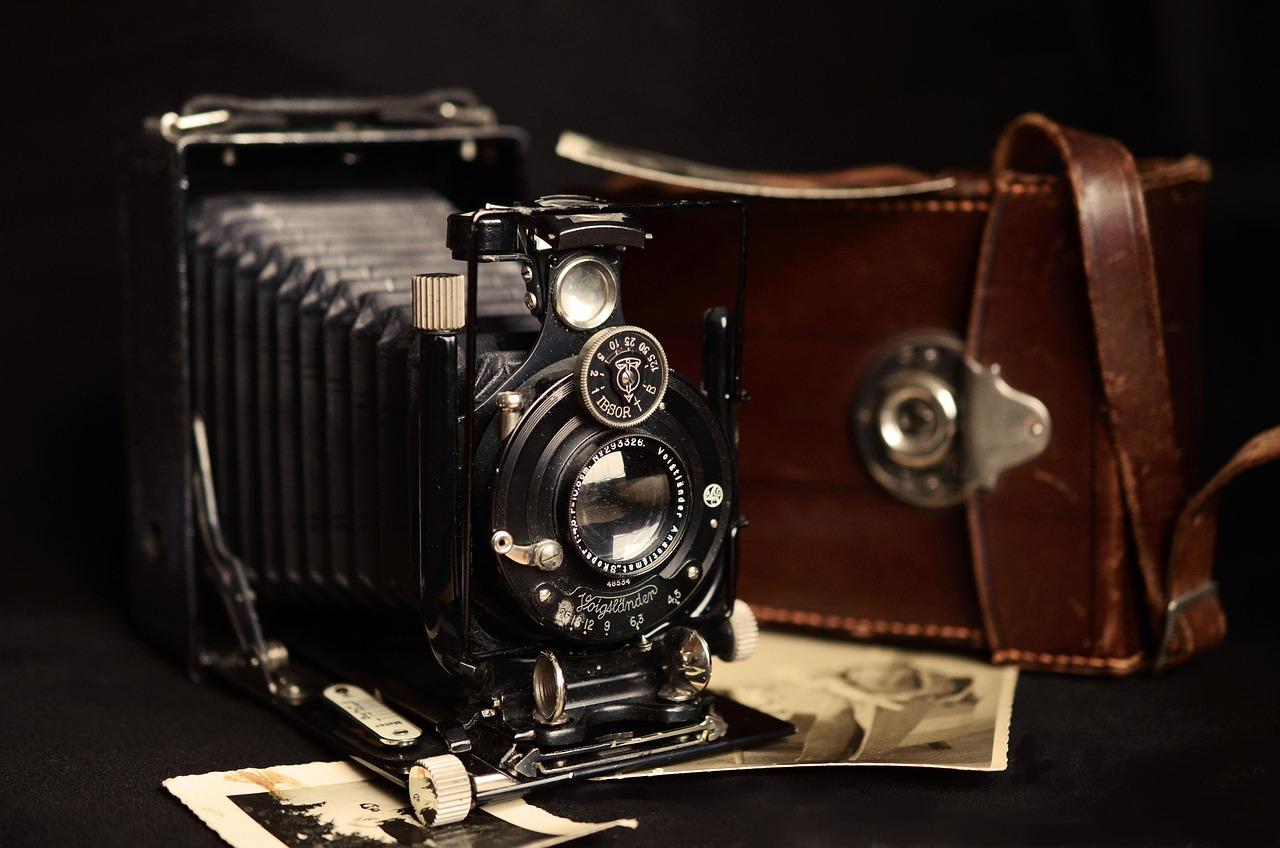
If you’ve ever held an old camera-the cool heft of brass, the soft scuff of leather, the decisive clack of a mechanical shutter-you know they’re more than vintage decor. Antique cameras are time machines. They didn’t just record the world; they taught us how to look at it. From the patience demanded by early daguerreotypes to the shoulder-slung freedom of 35mm, every era’s hardware nudged photographers toward certain stories, rhythms, and styles.
Long exposures made people hold their breath and their poses, giving portraits a formal gravity. Waist-level finders encouraged quiet, intimate framing. Large glass plates rewarded careful composition; tiny negatives invited spontaneity. The tools shaped the work-from scientific documentation and studio portraits to street candids and family snapshots-and along the way they molded our collective memory.
In this article, we’ll rewind through photography’s early gear: the box cameras and bellows, the twin-lens treasures, the rugged rangefinders, and the first instant wonders. We’ll explore how their quirks and limitations-slow emulsions, fixed lenses, flash powder and bulbs-sparked creative solutions that still influence how we shoot today. Whether you’re a collector, a smartphone photographer, or just camera-curious, consider this your friendly guide to the machines that wrote photography’s first chapters-and the lessons they still whisper every time we press the shutter.
Table of Contents
- What Early Cameras Taught Photographers About Light Framing And Patience
- Iconic Antique Models To Try And The Kinds Of Shots They Inspire Today
- How To Choose Load And Meter A Vintage Camera With Film And Lens Picks
- Care Storage And Simple Restoration Tips With Trusted Tools And Suppliers
- In Retrospect
What Early Cameras Taught Photographers About Light Framing And Patience
With slow emulsions and dim viewfinders, early gear forced photographers to read light with their eyes first. You learned to watch how shadows carved faces, how side-light pulled texture from stone, and how backlight turned dust into halos. Composing on an upside-down ground glass trained a different kind of attention: edges mattered, negative space mattered, and every line entering the frame needed a reason to stay. Limited frames meant you pre-visualized the print-tonality, falloff, and where the viewer’s gaze would land-before you even slid in the plate.
- Chase direction, not intensity: Move your feet until light sculpts form; bright isn’t the same as beautiful.
- Meter with your eyes: Squint to judge contrast and protect highlights; early glass punished blown whites.
- Frame like a ground glass: Scan the borders and corners; eliminate stray branches and mergers.
- Compose for the print: Leave breathing room for crops and consider how shadows will reproduce in matte vs. glossy.
- Work the foreground: Layer with fences, foliage, or cobbles to create depth the way bellows cameras demanded.
- Borrow reflectors: White walls, sidewalks, or a linen shirt bounce fill just like hand-held silver reflectors once did.
Those old shutters also taught a temperament. Long exposures reward steadiness, not speed; you count breaths, feel for wind lulls, and wait until a cloud thins just enough to soften contrast. Subjects became collaborators in stillness, anchoring a pose as you whispered “hold” and listened to the faint click of time. The ritual-the tripod legs, the level bubble, the focus loupe-didn’t slow you down; it made you intentional, turning patience into part of the image.
- Set a pre-shot ritual: Level, focus, stop down, recheck edges; consistency beats hurry.
- Wait for the stillness: Shoot between gusts, footsteps, and traffic-motion blur is a tax you can choose to pay.
- Coach the subject: Ask for anchored feet and gentle breaths; give a focal point to hold.
- Read the sky: Track clouds as moving diffusers; one passing veil can save an unforgiving scene.
- Embrace earned flare: Allow controlled reflections and shadow falloff to add period character, not chaos.
- Keep a field log: Note time, aperture, and weather; your future self learns faster than any light meter app.
Iconic Antique Models To Try And The Kinds Of Shots They Inspire Today
Some classics don’t just take pictures-they teach you how to see. Reach for a Kodak Brownie to rediscover the joy of simple framing and fuzzy, memory-soaked edges; a Leica III for pocketable precision that nudges you toward decisive-moment candids; a Rolleiflex TLR for waist-level intimacy and square-frame storytelling; a Polaroid SX‑70 for tactile, collaborative portraits; a Graflex Speed Graphic for cinematic depth and brassy flash drama; or a Hasselblad 500C/M for sculptural light and medium‑format clarity. Each of these has a personality that nudges your creative choices before you even click the shutter.
- Kodak Brownie: Soft, vignetted Sunday-afternoon scenes; let imperfections sing in backlit moments.
- Leica III: Fast, frameline-guided street candids; embrace zone focus and shadow play at dusk.
- Rolleiflex TLR: Low‑angle, waist-level portraits with gentle background swirl; square crops that center emotion.
- Polaroid SX‑70: Instant portrait sets; playful light tests and peel-apart style diptychs to engage your subject.
- Graflex Speed Graphic: Big‑neg architecture and press‑flash grit; slow, deliberate compositions with dramatic foregrounds.
- Hasselblad 500C/M: Studio‑clean product shots or elegant environmental portraits; crisp edges with creamy falloff.
Can’t source the originals? You can still borrow their visual language. Use slower shutter speeds for motion‑ghosted streets, stop down for deep press‑camera focus, or open up for dreamy TLR portraits. Add a bit of flare, subtle grain, and gentle vignette in post; compose for the square to channel medium format; and try waist-level angles to soften eye contact. Most of all, work at the pace these tools demand-measured, intentional, and tuned to light-because that rhythm is the secret ingredient behind their timeless look.
- Street prompt: Zone focus at f/8, frame a backlit crosswalk, wait for one clean silhouette.
- Portrait prompt: Waist-level lens, window light at 45°, square crop, subject leaning into the frame.
- Architecture prompt: Tripod, low ISO, front-on symmetry, small aperture for corner-to-corner crispness.
- Instant prompt: Two exposures-one high key, one low key-paired as a before/after mood study.
How To Choose Load And Meter A Vintage Camera With Film And Lens Picks
Start by pairing your camera’s era and shutter with the right film. If your top speed is 1/250, bright noon light loves ISO 50-100; for interiors or shade, reach for ISO 400 (or push to 800 if your lab is game). Negative stocks are forgiving-rate Color 400 at EI 200 for rich, smooth tones-while slides demand accuracy at box speed. Before the first frame, check light seals, clean the pressure plate, and dry-rehearse the advance. Need exposure without a meter? Sunny 16 has your back-then refine with a phone meter or a small incident meter. When dealing with old emulsion, remember the expired-film rule: add roughly a stop per decade if stored warm, and bracket when the shot matters.
- Loading 35mm: Keep tension on the rewind knob, seat the leader in the sprockets, advance two frames with the back closed; bottom-loading Leicas like a trimmed 8-10 cm leader.
- Loading 120: Align the start mark to the arrows, keep the paper tight, and wind to frame “1” slowly to avoid overlaps.
- Metering quick recipe: At f/16 use 1/ISO in full sun; open one stop for haze, two for heavy cloud, +1 for backlight. Set EI to include filter factors-Yellow +1, Red +2-3, Polarizer +1.5-2.
- Shutter realities: Old speeds drift; if highlights matter, expose for them on slide, for shadows on negative. Consider a hood to tame flare and boost contrast.
Lenses are your time machine. Single-coated classics deliver silvery contrast and gentle flare, while multi-coated glass cleans up color and boosts punch. Decide on a look, then pick a focal length that serves your story: 35mm for street, 50-58mm for everyday character, 85-105mm for portraits. Rangefinders excel with fast, compact lenses (mind minimum focus), and SLRs reward precise focusing and close-up work. Don’t fear quirks-use them. A touch of glow wide open can feel cinematic; at f/5.6-8 most vintage lenses sing.
- Character picks: Helios 44‑2 58/2 (swirl), Jupiter‑8 50/2 (creamy Sonnar), SMC Takumar 55/1.8 (silky micro‑contrast), Minolta Rokkor 45/2 (pocketable), Canon FD 35/2 (street sharp), Nikkor 105/2.5 (portrait legend), Zuiko 28/3.5 (tiny, crisp).
- Practical tips: Always use a lens hood, check infinity focus, and watch rangefinder parallax up close. For macro on SLRs, add tubes; on RFs, use close‑up attachments.
- Keep it steady: Leaf shutters often hand‑hold at slower speeds; add a strap brace or cable release for 1/30 and below.
- Finish strong: Note your EI, lens, filter, and aperture per frame-your future self (and your negatives) will thank you.
Care Storage And Simple Restoration Tips With Trusted Tools And Suppliers
Preserve the character etched into brass, leather, and glass by giving these classics a calm, stable home and a gentle routine. Temperature swings and damp corners are the enemies of shutters, bellows, and lubricants, so aim for consistency and clean airflow while keeping dust at bay. A little attention-exercising the mechanics, letting materials breathe, and avoiding off‑gassing foams-goes a long way toward keeping the feel of a crisp wind and the click of a well-timed curtain. Treat each camera like a small archive: protect it, label it, and visit it often enough that small issues never become stories of loss.
- Target climate: 35-50% relative humidity and moderate temperatures; avoid attics, basements, and radiators.
- Breathable storage: Archival boxes, cotton wraps, and acid‑free tissue; skip vinyl pouches and aging foam inserts.
- Smart desiccants: Indicating silica gel in vented sachets; recharge regularly and keep granules away from optics.
- Dust‑first cleaning: Use a hand blower before any cloth touches glass to prevent micro‑scratches.
- Exercise mechanisms: Cycle shutter speeds, cock/uncock, and focus helicoids monthly to keep lubricants distributed.
- Separate the ever‑ready case: Store leather cases apart to avoid trapped moisture and tannic acids.
When freshening up a shelf queen, think “least invasive first” and work with purpose-built gear from reliable sources. Start with dry methods, use camera‑safe solutions sparingly, and stop if resistance or haze appears beneath cemented elements-those moments belong to skilled technicians. With the right tools and reputable suppliers, simple jobs like light‑seal replacement, bellows checks, and exterior touch‑ups can restore function without rewriting the patina that tells its tale.
- Essential kit: Giottos‑style rocket blower, soft camel‑hair brush, PEC‑Pads with Eclipse or ROR lens cleaner, 99% IPA for metal/glass edges (never painted markings), bamboo or toothpicks, JIS screwdrivers (e.g., Vessel), nitrile gloves, and a pH‑balanced leather conditioner (e.g., Lexol) for straps and cases.
- Light seals: Pre‑cut foam kits from Aki‑Asahi or Interslice; lift old goo with isopropyl and wooden tools, then fit new foam carefully-shield prisms/mirrors during removal.
- Bellows health: In a dark room, place a small LED inside; patch pinholes with flexible black acrylic or PVA. Extensive rot? Commission replacements from Custom Bellows (UK) or similar specialists.
- Glass and fungus: Clean only exposed surfaces with a blower and lens solution; isolate fungus‑affected lenses to prevent spore spread. Haze, balsam separation, or internal fungus calls for a professional CLA.
- Trusted suppliers: B&H Photo, Adorama, Micro‑Tools, Fotoimpex (EU), Firstcall Photographic (UK), and the Film Photography Project store for film‑era parts and cleaners.
- Know your limits: Oily shutters, prism desilvering, rangefinder misalignment, and stiff helicoids are best left to reputable repair technicians to preserve both value and history.
In Retrospect
And that’s the charm of those old light-tight boxes: they didn’t just capture images, they shaped the way we see. From glass plates to roll film, bellows to rangefinders, every limitation nudged photographers toward patience, intention, and storytelling. Today’s instant taps and flawless autofocus stand on their shoulders.
If this piece sparked a little curiosity, follow it. Load a roll of film, switch your phone to manual for a day, or wander a flea market and hold history in your hands. Visit a camera museum, ask a relative about the family Brownie, or make one photograph this week as if you only had one shot.
I’d love to hear your stories: What’s the oldest camera you’ve used-or the one you wish you could try? Drop a comment below, share this with a friend who loves vintage gear, and subscribe for more deep dives into the tools that made modern photography possible.
Because in the end, every image we make is a small echo of that first brave frame-a reminder that light, time, and curiosity are still the real magic.
